
Introduction
When a refrigerated container stops working properly, it’s more than just a hassle; it poses a significant operational and financial threat. Whether you’re storing pharmaceuticals, perishable foods, chemicals, or delicate industrial parts, even a slight temperature change can lead to stock loss, regulatory issues, and strained client relationships.
The silver lining? Most temperature failures don’t just happen out of the blue. Refrigerated containers often provide clear warnings before things get critical. Business owners and site managers who know which signs to look for can take swift action, safeguard their inventory, and avoid costly downtime.
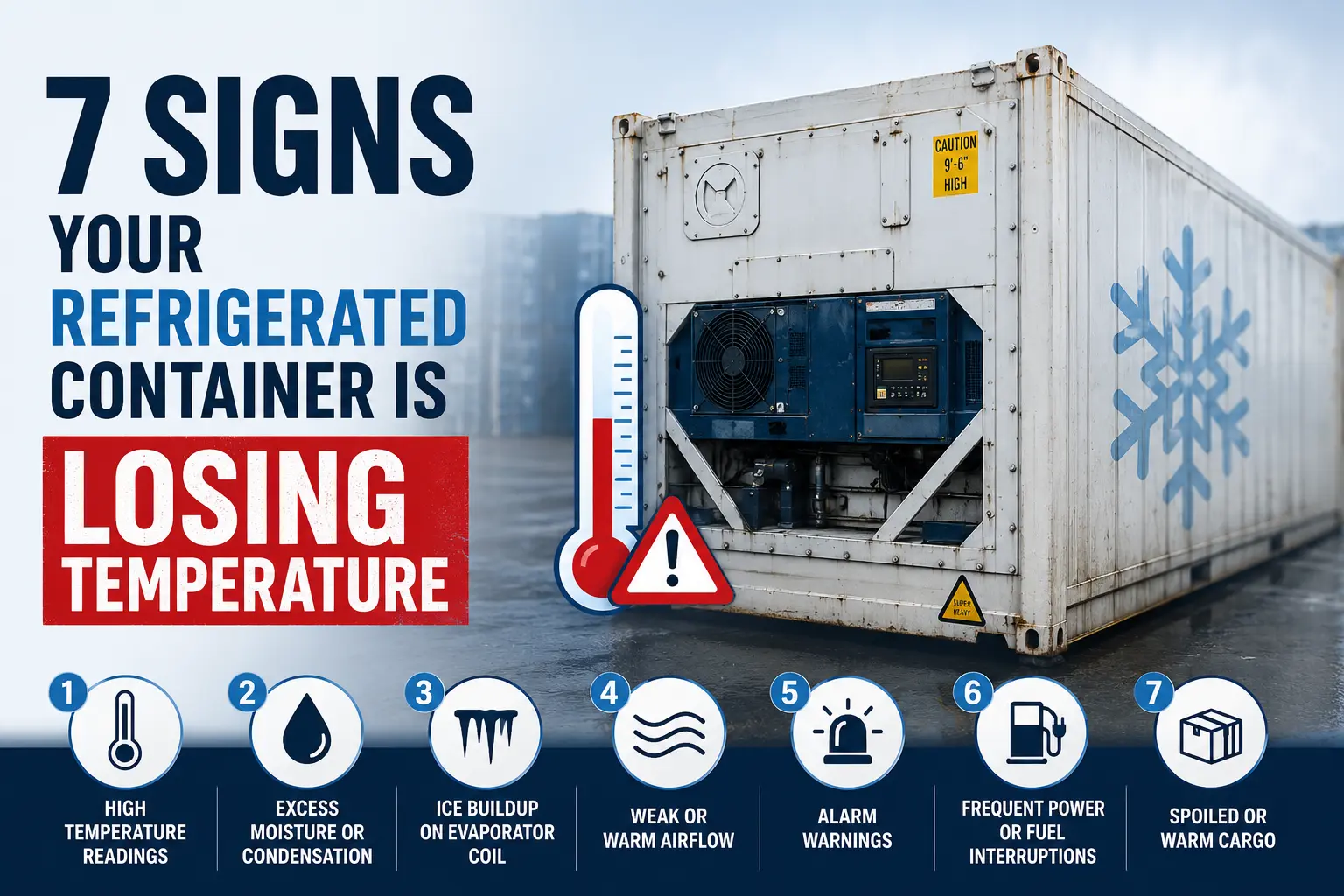
Here are the seven key indicators that your refrigerated container is losing its temperature control, and what steps to take when you notice them.
1. The Internal Temperature Is Higher Than the Set Point
This is the most obvious sign, but many businesses only realise it during a routine check, by then, damage may have already happened. If your container’s internal temperature consistently shows higher than the set point, it means the refrigeration unit isn’t keeping the environment as it should.
This could point to a refrigerant leak, a compressor that’s on the fritz, a blocked condenser, or even a power supply problem. Don’t just brush off a single high reading as a fluke. Keep track of the temperature over several hours. If you notice a consistent or rising trend, treat it as an urgent maintenance issue. For those using refrigerated containers for hire, reach out to your supplier right away so they can evaluate or replace the unit.
2. The Refrigeration Unit Runs Continuously Without Cycling Off
A well-functioning refrigeration unit should cycle on and off to keep the desired temperature. If it’s running continuously without taking a break, it’s working harder than necessary and probably not getting the job done effectively.
When a unit runs non-stop, it often indicates issues like a refrigerant shortage, inadequate insulation, or too much heat inside the container. Left unaddressed, these problems accelerate wear on the compressor and drive a significant rise in energy costs.
Should the unit run for an extended period without cycling off, check whether the container doors are properly sealed and whether anything inside is obstructing airflow. Neither factor being the cause is a strong signal to schedule a professional inspection without delay.
3. Ice Build-Up on the Evaporator or Interior Walls
A little frost on the evaporator coils is perfectly normal. But if you notice a lot of ice building up, that’s a red flag. When ice accumulates on the evaporator, it can block airflow, lower cooling efficiency, and might even lead to the unit shutting down completely.
There are a few common culprits behind this issue, like a malfunctioning defrost cycle, a damaged door seal that lets in warm, humid air, or an imbalance in the refrigerant. If you see ice forming on the inside walls instead of just the evaporator, that’s a serious sign that moisture is getting into the container at an alarming rate.
For businesses that depend on refrigerated containers for long-term storage, it’s crucial to include regular defrost checks in their maintenance routine to catch these problems early on.
4. Warm or Damaged Door Seals
The door seals on a refrigerated container are essential. They play a key role in keeping the cold air inside while blocking out the warm air from outside. To check if they’re doing their job, run your hand along the seals while the refrigeration unit is on.
If you feel any cold air escaping, that means the seal is not doing its job properly. Take a close look at the rubber gaskets for any cracks, tears, or signs of wear, especially in places where the seal might not be sitting snugly against the door frame.
Even a tiny gap in a door seal can make the refrigeration unit work much harder to keep the heat out. In hot weather, a damaged seal can prevent the unit from maintaining the right temperature altogether.
5. Unusual Noises from the Refrigeration Unit
A properly functioning refrigeration unit hums along quietly, creating a steady, low-level sound. If you start hearing banging, rattling, grinding, or high-pitched squeals, it’s a sign that something might be going wrong inside.
Banging or clanking noises often suggest that a compressor part is loose or failing. Rattling could mean there’s a loose panel or some debris caught in the fan. Meanwhile, grinding or squealing sounds usually point to worn bearings in the fan motor or compressor.
Don’t brush off these unusual noises; they’re often early indicators of a bigger issue that could lead to a complete breakdown of your refrigeration system if you ignore them. If your unit begins to make unexpected sounds, it’s wise to schedule an inspection before things get worse.
6. Increased Energy Consumption Without Explanation
If you notice a sudden or gradual spike in the energy consumption of your refrigerated container, without any changes to the goods inside or the surrounding temperature, it’s a clear sign that the unit is working harder than it should be. This kind of inefficiency usually stems from issues like refrigerant loss, worn-out insulation, a struggling compressor, or a mix of all three.
Keeping an eye on energy usage is especially important for businesses that operate refrigerated containers for hire across different locations, as it enables them to compare units and quickly spot any that aren’t performing well. If you see your energy bills climbing or your generator load readings increasing without a solid reason, consider it a technical alert and schedule a service.
7. Condensation or Moisture Inside the Container
When you start to feel that warm, humid air creeping into your refrigerated container, it usually points to a few common issues: a worn-out door seal, a damaged panel joint, or a problem with the ventilation system.
Having moisture inside a refrigerated container can cause some serious headaches. For one, it accelerates the spoilage of perishable goods and creates an ideal environment for mould and bacteria to thrive. On top of that, it puts extra pressure on the refrigeration system, forcing it to work overtime to manage humidity levels it wasn’t designed to handle.
If you notice condensation forming inside your container, the first step is to check those door seals. If they look good, then it’s time to arrange a detailed inspection of the insulation panels and the refrigeration system.
What to Do If You Spot These Signs
If you identify any of the warning signs above, act immediately:
- Document the issue — record temperatures, note when the problem started, and photograph any visible damage
- Check the basics — power supply, door seals, and airflow around the unit
- Contact your supplier — if you are using refrigerated container hire, your provider should respond quickly with maintenance support or a replacement unit
- Protect your stock — if temperatures cannot be restored, move temperature-sensitive goods to an alternative cold storage facility without delay
Choose a Reliable Refrigerated Container Supplier
Prevention is always more cost-effective than recovery. Choosing a high-quality supplier for your refrigerated containers for hire or purchase ensures you start with units that are properly maintained, accurately calibrated, and fit for purpose.
Conrail supplies refrigerated containers for hire and sale across the UK, with units available in 20ft and 40ft sizes. Their containers operate across a temperature range of -25°C to +30°C, making them suitable for food storage, pharmaceutical logistics, industrial components, and research applications. Customisation options are available to meet specific operational requirements.
Whether you need refrigerated containers for sale as a permanent installation or flexible refrigerated container hire for a short-term project, Conrail’s team can advise on the right specification for your business.
Conclusion
Temperature control issues in refrigerated containers usually come with some warning signs. By keeping an eye out for the seven indicators discussed in this article, like rising internal temperatures, units running continuously, damaged door seals, and unexpected condensation, business owners can take action before they lose stock or face disruptions in their operations.
Regular inspections, quick responses, and a dependable supply partner are the key pillars of effective cold storage management. If your refrigerated container is showing any of these warning signs, don’t hesitate. Take action now to safeguard your business.