
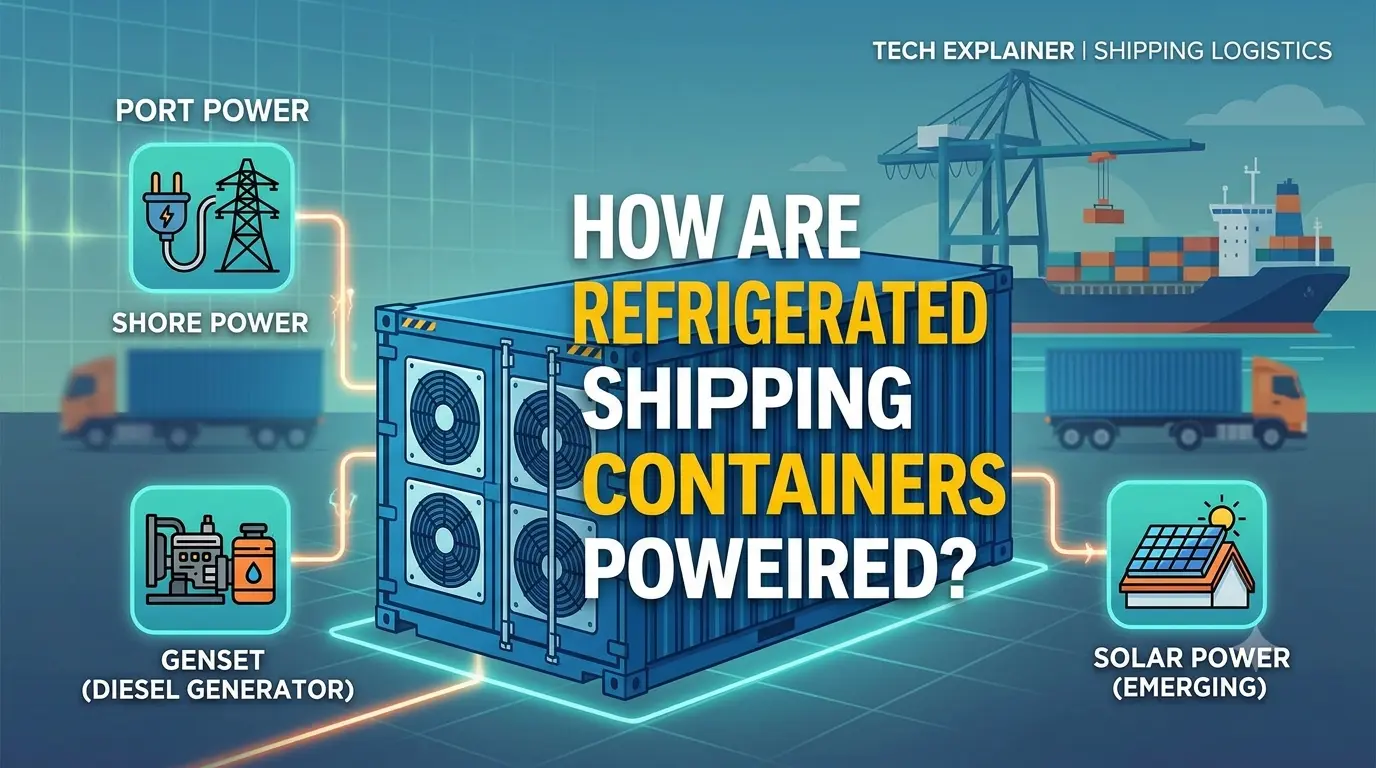
Refrigerated shipping containers, often called reefers, do not stay cold on their own. Each unit relies on an integral refrigeration system that draws power from an external source, and understanding how that power reaches the container helps buyers and hirers plan their logistics properly. Whether you’re moving fresh produce across the country or storing pharmaceuticals on an industrial site, how you power the container directly affects how reliably it holds temperature.
This guide explains the main power sources used for refrigerated containers in the UK, how the electrics work, and what businesses need to consider before they arrange refrigerated container hire.
The Refrigeration Unit: The Heart of the System
Every reefer container has a refrigeration unit built into one end of the box. This unit works like an industrial fridge or freezer. It draws in warm air, cools it, and circulates it through the container via a floor grille or T-bar flooring system. The unit runs continuously, adjusting output as needed to hold a set temperature, typically anywhere from -25°C to +30°C depending on the cargo.
None of this happens without electricity. The compressor, fans, and control panel inside the unit all need a stable, three-phase power supply to function correctly. Without it, the container is simply an insulated steel box.
Mains Electricity: The Standard Power Source for Static Storage
When a refrigerated container is used for static storage, such as on a farm, at a food processing site, or in a warehouse yard, it usually connects directly to the mains electricity supply. This is the simplest and most cost-effective way to power a container that stays in one place.
Manufacturers design most refrigerated units to run on a three-phase supply. Commonly rated at 400V in the UK, though some smaller or older models can run on single-phase power at reduced efficiency. Power consumption typically ranges from 5kW to 11kW, depending on the container’s size and how hard the unit works to reach its target temperature.
Businesses hiring a container for on-site storage need to confirm they have suitable three-phase access or arrange for an electrician to install one before delivery. Getting this right from the outset avoids delays once the container arrives.
Read more: Storage Containers for Hire & Sale UK
Diesel Generators: Powering Containers on the Move
Containers don’t always sit still. During road transport, rail transit, or use in locations without a grid connection, a diesel generator, known in the industry as a genset, takes over as the power source.
A genset pairs a diesel engine with an alternator. The engine burns fuel to create mechanical energy, and the alternator converts that mechanical energy into the electrical current the refrigeration unit needs. Gensets are typically fitted in one of two ways:
- Clip-on gensets attach to the front of the container and can be swapped between units fairly quickly, making them popular for hire fleets that move containers between jobs.
- Underslung gensets mount beneath the chassis or trailer and stay paired with a specific vehicle, offering a more permanent setup for dedicated routes.
Manufacturers build diesel gensets to run for extended periods without attention, which makes them well suited to long journeys or remote sites where mains power isn’t an option. Operators should check fuel, oil, and coolant before every long trip. This helps protect the cargo during transit.
Shore Power and Ship Connections
Refrigerated containers travelling by sea plug into a vessel’s onboard electrical grid, commonly referred to as shore power or reefer plugs. Modern container ships have dedicated reefer points. They keep refrigerated containers powered during ocean crossings. At ports, containers connect to dedicated power outlets. They stay powered while waiting to be loaded or unloaded.
The container moves smoothly from ship to quay to road transport. Operators switch power sources without interrupting the cooling cycle.
Dual-Power Capability: Switching Sources Without Losing Cooling
Most modern refrigerated units, including those supplied for refrigerated containers for hire, are dual-power capable. The unit automatically detects the available power source. It switches between diesel, mains, or shore power without interrupting cooling.
This matters enormously for temperature-sensitive cargo. A break in the cold chain, even a short one, can affect food safety or compromise pharmaceutical stock. Dual-power switching keeps reefer containers running. It allows reliable movement between sea, road, and storage.
Read more: Humidity-Controlled Containers
Choosing the Right Power Setup
The right power source depends entirely on how the container will be used:
- Static, long-term storage on a business site is almost always powered by mains electricity, since it’s cheaper to run and doesn’t need refueling.
- Transport and remote locations typically rely on a diesel genset, giving the unit independence from fixed infrastructure.
- Sea freight uses dedicated ships and port power connections designed specifically for reefer containers.
Anyone considering refrigerated containers for hire or looking at refrigerated containers for sale should think through where the unit will sit. Is three-phase power already available? Will the job need a generator for any part of the journey? A supplier experienced in reefer logistics can advise on the correct power arrangement before delivery. Helping avoid downtime once the container is in place.
Read more: Deep Freeze Containers
Keeping the Cold Chain Unbroken
Refrigerated shipping containers are engineered to be flexible, but that flexibility depends entirely on a stable power supply. Containers use different power sources during transport. They run on mains electricity, diesel generators, or ship power. At sea, shore power and onboard vessel systems keep the refrigeration unit running. Getting the power setup right from the start is what keeps perishable and temperature-sensitive goods safe, whatever route they take.
For businesses across the UK looking into refrigerated container hire. Understanding these power requirements in advance makes for a smoother, more reliable installation from day one.
Need a refrigerated container powered and ready to go? Conrail delivers 20ft and 40ft reefer containers across the UK, with guidance on the right power setup for your site.