
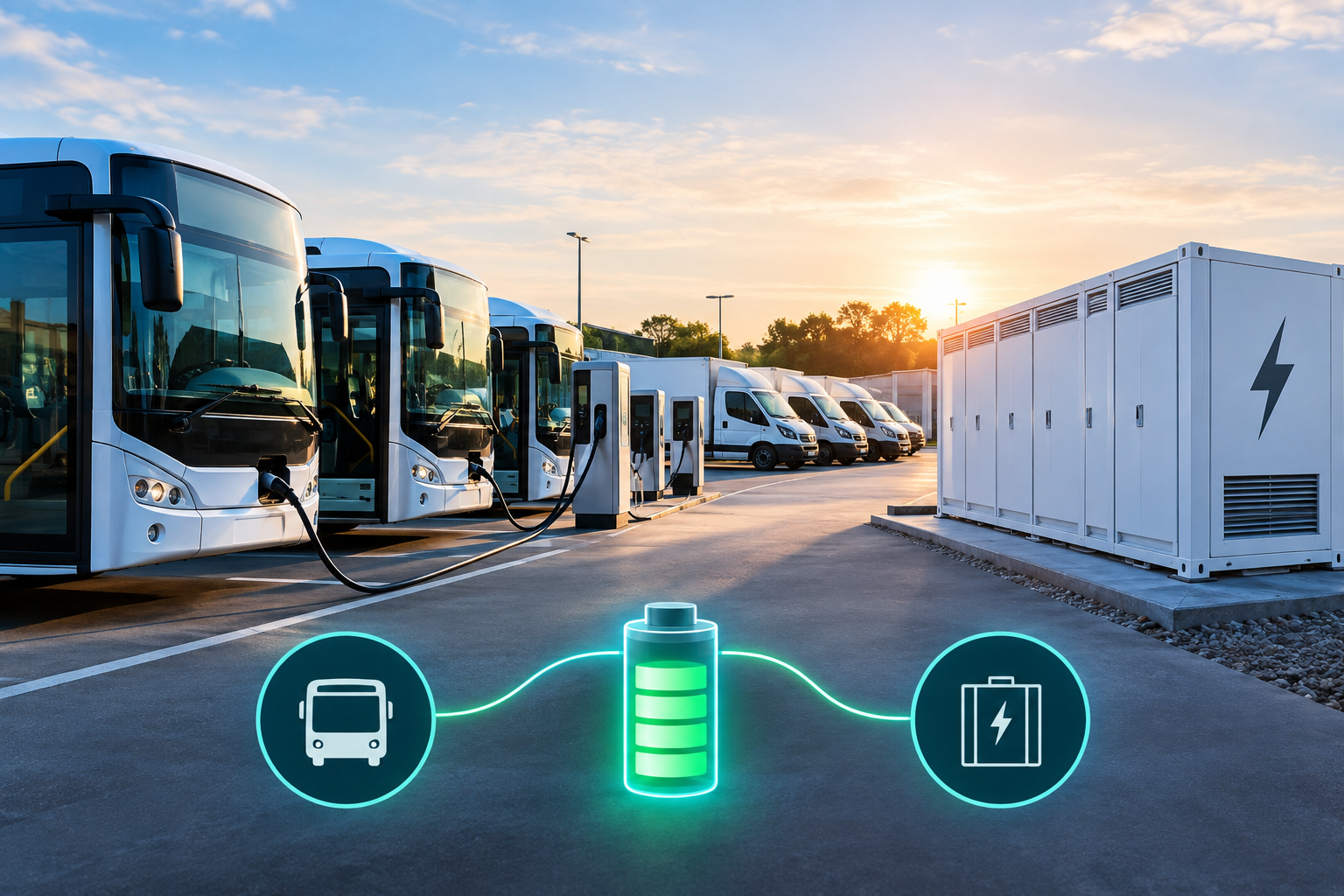
As UK fleets accelerate their shift to electric vehicles, one problem keeps landing on operators’ desks before the vehicles even arrive: where and how to store lithium batteries safely, compliantly, and at scale. Grid connection delays, insurance requirements, and fire safety regulations mean that depot electrification is no longer just about installing chargers – it’s about having the right infrastructure in place to store battery stock, spare packs, and energy storage systems (ESS) securely on site.
That’s where a purpose-built lithium battery storage container comes in. For fleet operators across the UK, these units are becoming the fastest, most cost-effective way to solve battery storage challenges without waiting years for permanent infrastructure or planning approval.
Why EV Fleet Operators Are Turning to Battery Storage Containers
Fleet electrification has moved from “if” to “how” for most UK operators, but the infrastructure hasn’t always kept pace with demand. Grid capacity remains one of the biggest bottlenecks – industry bodies have flagged that depot charging connections can take years to secure in areas where local networks are already constrained. Government schemes are helping close the gap, with funding available to support depot charging and on-site energy infrastructure, but many operators still need a practical, near-term solution while permanent grid upgrades are underway.
On-site battery energy storage is increasingly the answer. By pairing EV charging with a battery storage system, fleets can buffer peak demand, charge vehicles overnight when electricity is cheaper, and reduce reliance on constrained grid capacity – all without waiting for a full network upgrade. But storing lithium battery stock, ESS units, and spare packs brings its own set of risks, and that’s where fire rated lithium battery storage containers become essential rather than optional.
The Core Challenges Fleet Operators Face
- Fire risk from thermal runaway – lithium-ion and LiFePO4 batteries can fail in ways that spread rapidly if not properly contained and ventilated.
- Insurance and compliance pressure – insurers and local authorities increasingly expect dedicated, fire-rated storage rather than ad-hoc solutions inside existing buildings.
- Limited depot space – many depots weren’t designed with battery storage in mind, and retrofitting a permanent structure isn’t always practical or affordable.
- Scaling across multiple sites – fleets operating from several depots need a consistent, repeatable storage solution they can deploy quickly.
- Short-term vs long-term need – some projects require storage for a few months, others need a permanent fixture, and the right solution depends on which.
Lithium Battery Storage Containers: A Practical Fix for Fleet Depots
A dedicated lithium battery storage container solves each of these problems in one unit. Conrail’s containers are built specifically around the risks of lithium chemistry batteries, with fire-rated internal linings, forced mechanical ventilation, blast-relief panels, and integrated spill containment as standard. For fleets managing higher-risk applications, optional gas detection, automated fire suppression, and remote monitoring can be specified too.
Because they arrive ready-built and can be positioned directly on site, containers give fleet operators a way to add compliant battery storage capacity in weeks rather than the months or years a permanent structure might take – a critical advantage when grid connection timelines are already the limiting factor on a project.
Lithium Battery Storage Container Hire
For fleets still scaling their EV operations, lithium battery storage container hire offers a flexible way to add capacity without capital outlay. This suits:
- Construction and infrastructure projects with a defined end date
- Fleets trialling EV routes or vehicle types before committing long-term
- Seasonal or temporary depot expansions
- Operators waiting on a permanent grid connection or planning permission
Hire periods can run from a few weeks to several months, and containers are delivered, positioned, and collected by our team – so there’s no long-term commitment tying up your capital.
Lithium Battery Storage Containers for Sale
Where battery storage is a permanent part of depot operations, buying a lithium battery storage container outright is usually the more cost-effective route over time. Each unit for sale can be built to your specification – including flooring, ventilation rate, RAL colour finish, and integrated safety systems – so it matches your battery chemistry and site requirements exactly, with no ongoing hire costs.
What to Look for in a Fire Rated Lithium Battery Storage Container
Not all battery storage containers are built to the same standard, and for fleet operators the stakes are too high to compromise. When comparing suppliers of lithium battery storage containers UK-wide, look for:
- Fire-rated internal linings tested to recognised standards such as BSEN 1363, designed to contain a thermal runaway event.
- Forced mechanical ventilation to manage off-gassing and reduce the risk of a fire escalating.
- Blast-relief panels that allow pressure to release safely in the event of an incident.
- Integrated spill containment to manage any leaking electrolyte safely.
- Flexible sizing, from 10ft units up to 45ft or bespoke configurations, to match your fleet’s storage volume.
- Weatherproofing and climate control options, particularly important for temperature-sensitive battery chemistries stored outdoors on exposed depot sites.
Why This Matters More as Fleets Scale
As more depots bring EV charging infrastructure and on-site battery storage online, the number of sites storing significant volumes of lithium batteries is only going to grow. Fleet operators who get ahead of this – treating battery storage as core infrastructure rather than an afterthought – put themselves in a stronger position on safety, insurance, and operational resilience, while avoiding costly delays if a depot’s charging or storage setup doesn’t meet the standard regulators or insurers expect.
Whether you need a single unit for one site or a consistent specification rolled out across a national depot network, working with an experienced lithium battery container supplier means you get advice tailored to your fleet, not a generic box.
Get a Lithium Battery Storage Container for Your Fleet
Conrail supplies fire-rated, ATEX-ventilated lithium battery storage containers for hire and sale across the UK, built for energy storage systems, EV fleet infrastructure, and industrial battery operations. Our team can advise on the right size, specification, and safety configuration for your depot – and containers can be delivered and positioned at short notice across the UK.
Call 01252 715406 or email info@conrail.co.uk to discuss your fleet’s battery storage requirements.
FAQs
1. What is a lithium battery storage container used for?
A lithium battery storage container safely houses lithium-ion or LiFePO4 battery packs for applications such as EV fleet infrastructure, energy storage systems (ESS), renewable energy projects, and industrial battery operations. For fleet operators, they’re commonly used to store spare battery stock, charging infrastructure components, or on-site ESS units used to manage grid demand.
2. Can I hire a lithium battery storage container short-term?
Yes. Lithium battery storage container hire is available from a few weeks to several months, making it a practical option for fleets trialling electrification, managing temporary depot capacity, or waiting on a permanent grid connection.
3. Is it better to hire or buy a lithium battery storage container?
It depends on your timeline. Hire suits temporary or trial projects where flexibility matters most. Buying suits fleets that know battery storage will be a permanent part of depot operations, since it removes ongoing hire costs over time.
4. What sizes of lithium battery containers are available?
Containers are available from 10ft up to 45ft in length, with bespoke configurations available for fleets with larger or non-standard storage requirements.
5. Can lithium battery storage containers be used outdoors on a depot site?
Yes. All containers are weatherproof and built for outdoor use, including exposed industrial and depot sites. Internal climate control is available as an option for temperature-sensitive battery chemistries.
6. How quickly can a lithium battery storage container be delivered?
Containers are available at short notice across the UK, delivered by specialist transport and positioned on site using a crane-lift or tilt-bed vehicle depending on size and site access. Our team will advise on any site preparation needed in advance.
7. Can a lithium battery storage container be customised for our fleet’s battery type?
Yes. Ventilation rates, flooring, fire suppression systems, and internal layout can all be specified to suit your battery chemistry and operational requirements, whether for EV packs, ESS units, or industrial batteries.
8. Do I need gas detection or fire suppression in a battery storage container?
This depends on the volume and type of batteries stored, and your site’s risk assessment. Many fleet operators opt for gas detection and automated fire suppression as an added layer of protection, particularly for higher-capacity ESS storage. Our team can advise on the right specification for your application.
9. Can I switch from hiring to buying later on?
Yes. If your fleet’s requirements move from temporary to permanent, we can discuss converting a hire arrangement into an outright purchase – get in touch with our team to talk through your options.