
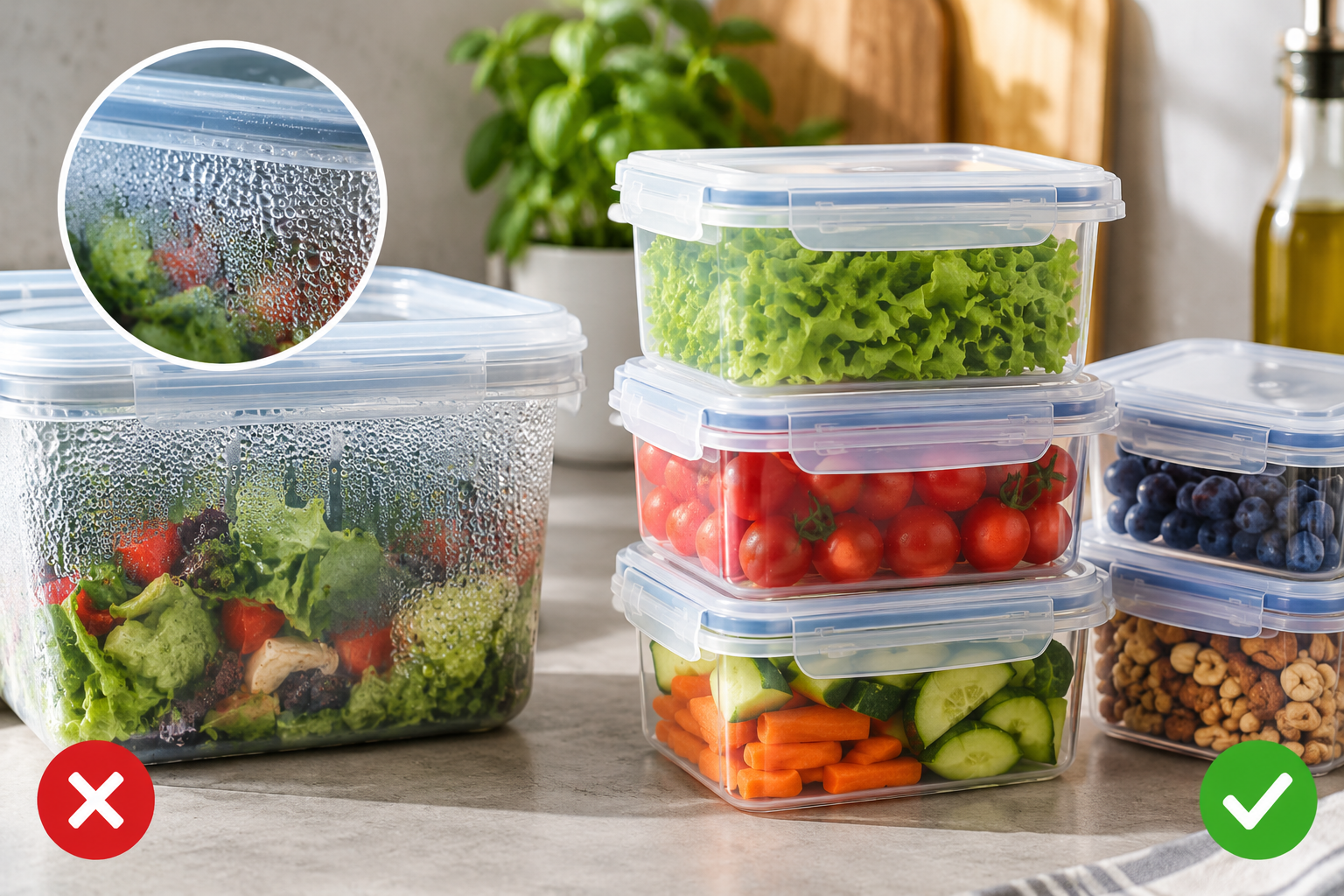
Anyone who’s opened a storage container after a cold night and found water dripping from the ceiling knows the problem isn’t leaks – it’s condensation. It’s one of the most common (and most damaging) issues affecting stored goods, and it catches out businesses who assume a sealed metal box is automatically a safe one. Here’s what actually causes it, and what genuinely helps prevent it.
Why Storage Containers Get Condensation in the First Place
Shipping and storage containers are almost always built from steel, which conducts temperature changes quickly. When warm, moist air inside the container meets a cold steel roof or wall – typically overnight, or during sudden temperature drops – the moisture in that air condenses into water. This effect is often called “container rain,” and it’s exactly what it sounds like: water forming on the ceiling and dripping down onto whatever’s stored below.
The bigger the temperature swing between day and night, and the more humidity in the air to begin with, the worse the condensation tends to be. This is why the problem is often seasonal, appearing more in autumn and spring when day-to-night temperature differences are at their largest, rather than in the depths of winter when everything stays uniformly cold.
Why Condensation Is a Real Problem, Not Just a Nuisance
Condensation isn’t just cosmetic. Left unmanaged, it can lead to:
- Rust and corrosion on metal goods, equipment, or the container structure itself
- Mould and mildew growth on packaging, textiles, or organic materials
- Damage to sensitive stock, particularly paper, electronics, and anything moisture-sensitive
- Reduced shelf life for stored goods generally, even where damage isn’t immediately visible
For research and development facilities, laboratories, or businesses storing high-value or moisture-sensitive materials, this isn’t a minor inconvenience – it can mean write-offs, spoiled batches, or compromised equipment.
Ventilation: The First Line of Defence
For lower-risk storage, basic ventilation can go a long way. Vents allow some air exchange between the inside and outside of the container, which helps reduce the buildup of trapped moist air. This works reasonably well for goods that aren’t especially sensitive to humidity, but it has real limits – ventilation reduces the severity of condensation, it doesn’t eliminate the underlying temperature and humidity swings causing it.
Desiccants and Moisture Absorbers
Desiccant products – moisture-absorbing bags, canisters, or poles – are a common short-term solution, particularly for smaller containers or lower-volume storage. They work by pulling excess moisture out of the air before it has a chance to condense. This can be effective for shorter storage periods or less humid climates, but for longer-term storage, larger volumes, or genuinely humidity-sensitive contents, desiccants alone are usually not enough to keep conditions stable.
Climate Controlled and Humidity Controlled Containers
For anyone storing goods where condensation simply isn’t an acceptable risk, the more reliable option is a properly climate controlled or humidity controlled container – one designed to actively manage temperature and moisture levels, rather than relying on passive measures to reduce the symptoms.
At ConRail UK, we specialise in supplying standard and bespoke climate controlled containers, including freezer, heated, chilled, and air-conditioned options, designed to maintain stable internal conditions regardless of what’s happening outside. Rather than hoping ventilation or desiccants keep pace with the weather, a climate controlled container actively regulates the internal environment, which is what genuinely prevents the temperature swings that cause condensation to form in the first place.
This is particularly relevant for research and development facilities, which is one of the sectors we regularly support – projects involving sensitive materials, equipment, or samples often can’t tolerate the kind of humidity fluctuation a standard container allows.
Laboratory and Specialist Storage Needs
Some storage needs go beyond general climate control. For businesses requiring controlled environments for testing, research, or specialist equipment, our laboratory containers are built with those specific requirements in mind, rather than being a general-purpose container adapted after the fact.
Matching the Container to the Contents
Not every storage need calls for full climate control. Depending on what’s being stored, options range across our broader container range, including open top and Full Side Access (FAS) containers for goods needing different loading access, flexi tanks and dry bulk liners for liquid or bulk materials, and reefers for temperature-sensitive transport and storage. Matching the container type to the actual contents – not just defaulting to a standard box – is often the real difference between an occasional condensation problem and a well-managed storage setup.
Buy, Rent, or Lease – Flexibility Matters Too
Condensation prevention isn’t only about the container itself; it’s also about matching the storage arrangement to how long you actually need it. ConRail UK offers containers for outright purchase, rental, or lease, which means businesses aren’t forced into a long-term commitment for what might be a short-term storage need, or vice versa. We’d always recommend speaking to your accountant about which purchase option makes the most financial sense for your situation.
Getting Condensation Control Right From the Start
The most effective way to prevent condensation isn’t to manage it after it appears – it’s to choose the right type of container before goods go into storage. For low-risk, short-term storage, ventilation and desiccants may be enough. For anything sensitive to moisture, temperature-critical, or stored over a longer period, a humidity controlled or climate controlled container removes the guesswork, keeping conditions stable regardless of what’s happening outside.
FAQs: Condensation in Storage Containers
What causes condensation inside storage containers?
Condensation forms when warm, moist air inside a container meets a cold steel surface, typically the roof or walls, causing moisture to condense into water – often called “container rain.”
Can condensation damage stored goods?
Yes. Condensation can lead to rust and corrosion, mould and mildew growth, and damage to moisture-sensitive stock such as paper, electronics, or organic materials.
Does ventilation stop condensation completely?
No. Ventilation reduces the severity of condensation by allowing some air exchange, but it doesn’t eliminate the temperature swings that cause it, especially for longer-term or higher-risk storage.
Are desiccants an effective long-term solution?
Desiccants work well for shorter storage periods or smaller volumes, but for longer-term storage or genuinely humidity-sensitive goods, they’re generally not sufficient on their own.
What is a humidity controlled container?
A humidity controlled container actively regulates internal temperature and moisture levels, rather than relying on passive measures like ventilation, making it a more reliable option for sensitive or long-term storage.
Who typically needs a climate controlled container?
Businesses storing moisture-sensitive materials, research and development facilities, laboratories, and anyone storing goods where condensation poses a real financial or operational risk.
Can I rent a climate controlled container instead of buying one?
Yes. ConRail UK offers containers for outright purchase, rental, or lease, allowing flexibility depending on how long the storage is needed.
Is condensation worse at certain times of year?
Yes. Condensation is often more noticeable in autumn and spring, when the difference between day and night temperatures tends to be greatest.