
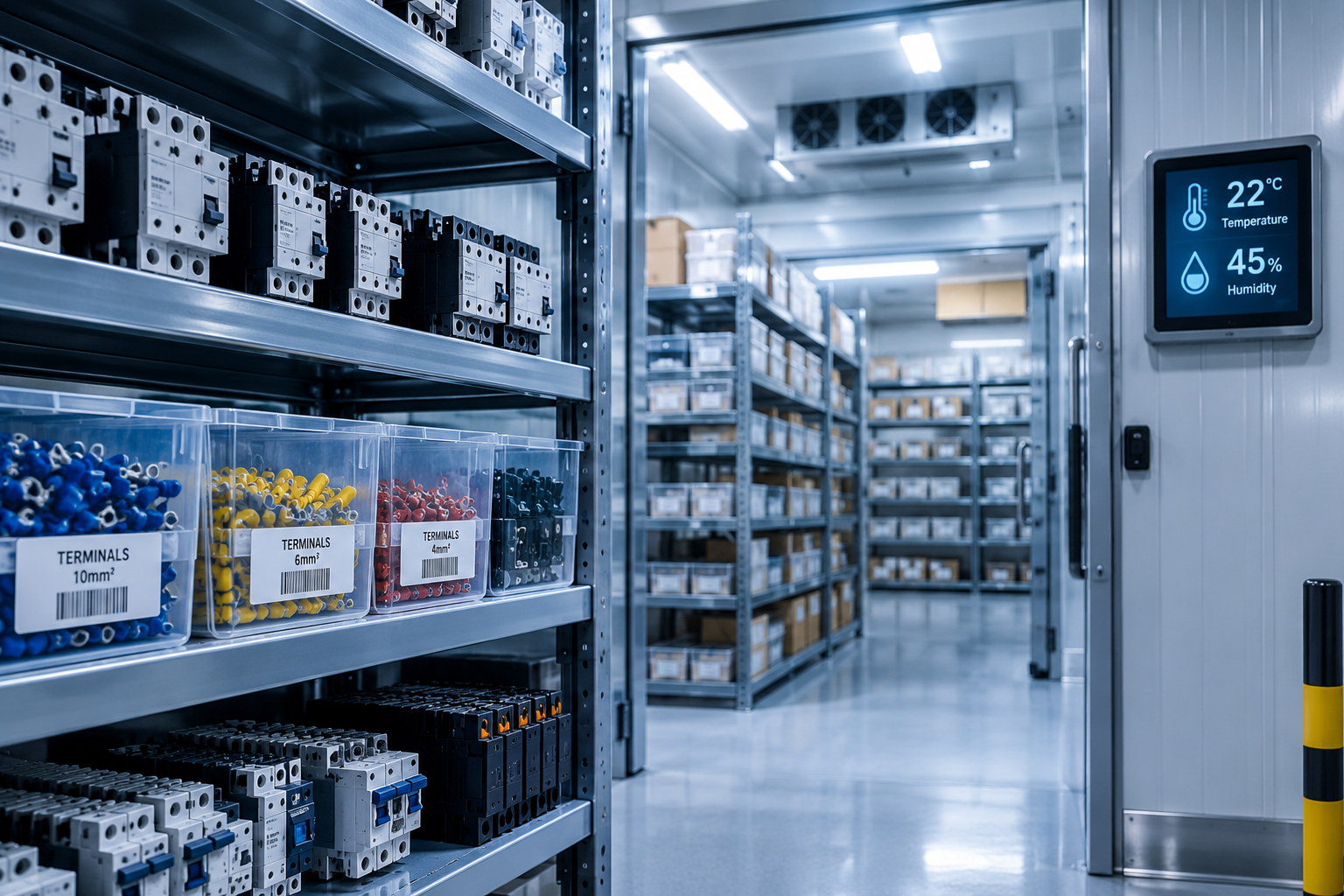
Electrical components can be highly sensitive to temperature, humidity, condensation, dust and other environmental conditions. When stored for extended periods, exposure to unsuitable conditions can lead to corrosion, deterioration, contamination and reduced reliability.
For businesses holding valuable electrical equipment, spare components or specialist parts, climate controlled storage can provide a more suitable environment than conventional storage.
Why Do Electrical Components Need Controlled Storage?
Many electrical components contain metals, plastics, insulation materials, circuit boards and other parts that can be affected by environmental conditions.
Moisture is one of the biggest concerns. Changes in temperature can create condensation, particularly when cold components are exposed to warmer, humid air. Over time, this can contribute to corrosion and damage to sensitive electrical connections.
Dust and contaminants can also become a problem, particularly for components that need to remain clean and ready for installation.
For businesses storing equipment for months or longer, maintaining a more stable environment can help reduce these risks.
What Electrical Components Can Benefit from Climate Controlled Storage?
A climate controlled storage unit can be suitable for a wide range of electrical and electronic components, including:
- Electrical control equipment
- Switchgear and electrical panels
- Circuit boards and electronic assemblies
- Transformers and specialist electrical equipment
- Motors and electrical components
- Sensors and instrumentation
- Industrial control components
- Replacement electrical parts
- Power distribution equipment
- Specialist equipment awaiting installation
The appropriate storage conditions will depend on the specific equipment, manufacturer recommendations and intended storage period.
How Temperature and Humidity Can Affect Electrical Components
Temperature and humidity can affect stored electrical equipment in several ways.
Corrosion
Moisture can cause corrosion on metal contacts, terminals, connectors and other exposed surfaces. Corrosion may affect both the appearance and functionality of components.
Condensation
Repeated temperature fluctuations can increase the risk of condensation. This can be particularly problematic when equipment moves between different environments or is stored in an area with significant temperature variation.
Material Deterioration
Some plastics, seals, insulation materials and other components can deteriorate when exposed to unsuitable temperatures or environmental conditions for prolonged periods.
Reduced Reliability
A component may appear undamaged externally but still be affected by prolonged exposure to moisture, temperature fluctuations or contamination. This can create problems when the equipment is eventually installed or brought back into service.
Climate Controlled Storage vs Standard Storage
Standard storage can be suitable for many general-purpose items. However, it may not provide the level of environmental stability required for sensitive electrical components.
A climate controlled storage unit is designed to provide greater control over environmental conditions, helping businesses protect equipment against unsuitable temperature and humidity levels.
The difference becomes particularly important when the stored equipment is expensive, difficult to replace or required for critical operations.
When Should Businesses Consider Climate Controlled Storage?
Climate controlled storage may be worth considering when:
- Electrical components are being stored for several months
- Equipment has a high replacement value
- Components are sensitive to moisture or temperature changes
- Spare parts are required for critical operations
- Equipment is being held between projects
- Imported equipment needs temporary storage before installation
- Specialist electrical equipment is awaiting commissioning
- Replacement components are difficult or expensive to source
- Manufacturer storage requirements specify controlled environmental conditions
The longer equipment remains in storage, the more important the storage environment can become.
Protecting Electrical Components During Long-Term Storage
Climate control is only one part of a suitable storage strategy.
Electrical components should also be properly packaged and protected from dust, moisture and physical damage. Where appropriate, businesses should follow the manufacturer’s storage recommendations and inspect equipment periodically.
Packaging should also be suitable for the expected storage conditions. Some equipment may require additional moisture protection, sealed packaging or other precautions.
Before storing valuable electrical equipment, businesses should consider:
- The manufacturer’s recommended storage temperature and humidity.
- The expected storage duration.
- Whether the equipment is vulnerable to condensation.
- How the equipment will be packaged.
- Whether regular inspection is required.
- How the equipment will be transported into and out of storage.
Why Climate Controlled Storage Can Make Commercial Sense
Replacing a damaged electrical component can be considerably more expensive than simply purchasing a replacement part. There may also be additional costs associated with project delays, equipment downtime, emergency procurement and installation.
For this reason, businesses should consider the total cost of storing electrical equipment, rather than focusing only on the storage price.
A controlled storage environment can help businesses reduce avoidable environmental risks while keeping important equipment available when it is needed.
Choosing a Climate Controlled Storage Unit for Electrical Equipment
Not every climate controlled storage solution will be suitable for every application.
Before choosing a storage solution, businesses should establish the environmental requirements of the equipment being stored. This includes the acceptable temperature range, humidity requirements, storage duration and any manufacturer-specific recommendations.
For larger or specialist equipment, a climate controlled storage container can provide an alternative to conventional warehouse storage, particularly where additional space is required or equipment needs to be stored at a specific location.
Climate Controlled Storage for Business and Industrial Equipment
Electrical components are often stored as part of wider industrial operations. Manufacturers, engineering companies, utilities, contractors and other businesses may need to hold spare equipment until it is required.
The right storage solution can help protect these assets while keeping them accessible and ready for future use.
For businesses that need more than conventional storage, climate controlled storage can provide a practical solution for protecting temperature- and humidity-sensitive electrical components.
Need Climate Controlled Storage for Electrical Components?
If your business needs to store electrical components, specialist equipment or other temperature-sensitive assets, Conrail can help identify a suitable storage solution.
We supply specialist storage and shipping containers for businesses that require more than standard storage, including climate controlled and temperature-controlled solutions.
Contact Conrail to discuss your storage requirements and find a suitable solution for your equipment.
Frequently Asked Questions
What is climate controlled storage?
Climate controlled storage is a storage environment where temperature and, depending on the solution, humidity can be managed to provide more stable conditions for sensitive goods and equipment.
Why is climate controlled storage important for electrical components?
Electrical components can be affected by moisture, condensation, temperature fluctuations and corrosion. Controlled storage can help reduce exposure to unsuitable environmental conditions.
Can electrical components be stored in a climate controlled storage unit?
Yes. Climate controlled storage units can be suitable for many electrical and electronic components, provided the storage conditions meet the requirements of the equipment.
Is climate controlled storage necessary for all electrical components?
No. Requirements vary depending on the component, materials, manufacturer’s recommendations and storage duration. Businesses should establish the appropriate storage conditions for their specific equipment.
Can climate controlled storage be used for long-term electrical equipment storage?
Yes. Climate controlled storage can be particularly useful when electrical equipment or components need to remain in storage for extended periods.
What is the difference between climate controlled and standard storage?
Standard storage generally provides protection from the elements but may not maintain stable environmental conditions. Climate controlled storage provides greater control over factors such as temperature and, where applicable, humidity.