
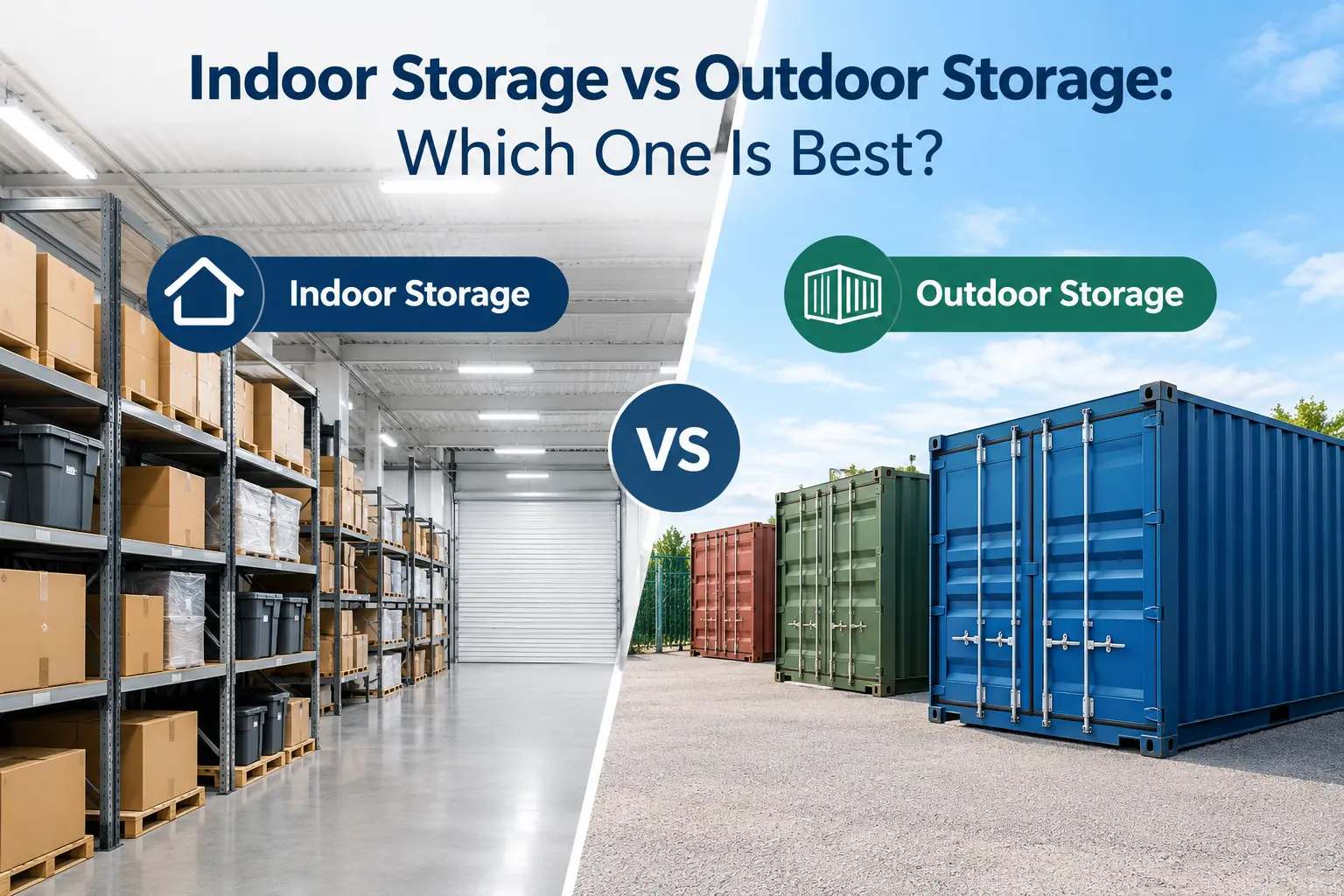
Choosing between indoor storage and outdoor storage depends on what we need to store, how long we need to store it and the level of protection required. Whether we manage a warehouse, run a retail business, oversee a construction project or need extra space at home, the right storage environment helps protect valuable goods and maintain efficient operations.
Both options offer practical advantages. Indoor storage provides shelter from direct exposure to the weather, while outdoor storage containers offer flexible space and convenient access. However, factors such as temperature, humidity, security, accessibility and cost can influence which solution works best.
For businesses handling sensitive stock, specialist equipment or important documents, climate controlled storage may also be worth considering. Understanding the differences between these storage options allows us to make a more informed decision and avoid unnecessary costs.
What Is Indoor Storage?
Indoor storage refers to goods kept inside a building, warehouse, storage facility or another enclosed environment. Depending on the facility, this may include individual storage units, designated warehouse areas or larger spaces for commercial inventory.
One of the main benefits of indoor storage is protection from direct exposure to rain, wind, sunlight and other outdoor conditions. This can help reduce the risk of water damage, dirt accumulation and weather-related deterioration.
Key Benefits of Indoor Storage
Protection from the weather: An enclosed building provides a physical barrier against rain, wind and direct sunlight. This makes indoor storage suitable for furniture, boxed stock, household belongings and many other items that could deteriorate when exposed to outdoor conditions.
Organised storage space: Indoor facilities can offer shelving, designated storage areas and structured layouts. These features help businesses organise inventory, identify products and manage stock more efficiently.
Security and controlled access: Many indoor facilities use CCTV, access controls, alarms and staff monitoring. However, security measures vary between providers, so we should check the arrangements before selecting a facility.
Cleaner storage conditions: Enclosed environments can limit exposure to dust, debris and pests when the building is properly maintained. This is particularly useful for packaged products, office equipment and items that require careful handling.
Does Indoor Storage Always Provide Climate Control?
No. An indoor unit may protect goods from the weather without maintaining a stable temperature or humidity level.
An unheated warehouse, for example, can become cold during winter and warm during summer. Humidity can also fluctuate, particularly in buildings with limited ventilation or inadequate moisture management.
Therefore, we should distinguish between standard indoor storage and temperature controlled storage. If goods require specific environmental conditions, we need to confirm the facility’s actual capabilities rather than assume that an enclosed building provides sufficient protection.
What Is Outdoor Storage?
Outdoor storage involves keeping goods in an external area, often using purpose-built storage containers, secure compounds or designated spaces on commercial premises.
Storage containers are particularly useful for businesses that need additional space without extending an existing building. Construction companies, retailers, manufacturers and logistics operators can use them to store tools, materials, equipment, packaging and general stock.
Key Benefits of Outdoor Storage
Flexible placement: We can position suitable storage containers close to warehouses, workshops, construction areas or loading zones. This reduces unnecessary movement between storage locations and working areas.
Convenient access: Outdoor containers can provide direct access to frequently used equipment and materials. Businesses can organise their contents around operational needs, although access arrangements depend on the site layout and container configuration.
Additional storage capacity: Containers offer a practical way to expand available space when inventory increases, projects become busier or permanent facilities reach capacity.
Potential cost advantages: Outdoor storage may avoid the expense of renting additional indoor space or extending a building. However, total costs depend on container size, rental terms, site preparation, transport, security and any environmental controls required.
What Should We Consider Before Using Outdoor Storage?
Outdoor storage conditions vary considerably. A well-maintained, weather-resistant container can protect goods from direct rain and wind, but this does not automatically prevent condensation or significant temperature changes.
Metal containers can heat up in direct sunlight and cool down during colder weather. Moisture may accumulate inside when warm, humid air meets cooler surfaces. Without appropriate ventilation, insulation or moisture management, these conditions can damage susceptible goods.
We should also check drainage, ground stability, roof condition, door seals, locking systems and the suitability of the location before storing valuable materials.
Indoor Storage vs Outdoor Storage: Key Differences
The most suitable option depends on the protection, accessibility and environmental conditions our goods require.
| Factor | Indoor storage | Outdoor storage |
| Weather protection | Building provides shelter from direct weather | Depends on container condition and site exposure |
| Temperature stability | Varies; standard buildings may experience fluctuations | Can experience greater temperature fluctuations |
| Humidity management | Depends on ventilation and environmental controls | Depends on container design and moisture management |
| Security | May include monitored access and building security | Depends on locks, site security and monitoring |
| Accessibility | May involve reception areas, corridors or facility opening hours | Can provide direct access where the site permits |
| Space flexibility | Limited by the available unit or building | Containers can provide additional space where placement is suitable |
| Cost | Depends on location, unit size and facility services | Depends on container size, transport, site preparation and rental terms |
| Best suited for | Goods needing shelter, organisation or specialist conditions | Tools, equipment, general stock and suitable commercial materials |
Protection from Weather and Environmental Changes
Indoor storage generally offers a more sheltered environment, but the level of protection depends on the building. Outdoor containers can also provide effective protection against rain and wind when they remain structurally sound and weather-resistant.
The important distinction is that weather protection is not the same as environmental control. Neither an ordinary indoor unit nor a standard outdoor container necessarily maintains the temperature and humidity levels required by sensitive goods.
Security and Access
Indoor facilities may offer additional building-level security, while outdoor containers can provide convenient access directly from a business premises.
We should assess both the security measures and daily access requirements. For example, a construction business may benefit from keeping tools close to its work area, whereas a company storing valuable stock may prefer a monitored facility with controlled entry.
Space, Convenience and Cost
Indoor storage can suit businesses that need an organised environment with access to handling equipment or warehouse services. Outdoor containers can be more practical when we need flexible space near our operations.
Rather than comparing rental prices alone, we should consider the total cost of storage, including transport, handling, insurance, security, site preparation and any measures needed to protect the stored goods.
When Is Climate-Controlled Storage Worth Considering?
Climate-controlled storage is worth considering when ordinary indoor or outdoor conditions may damage goods or affect their quality. The exact requirements depend on the materials involved, the manufacturer’s recommendations and the duration of storage.
Unlike standard storage, climate controlled storage is intended to maintain specified environmental conditions through appropriate heating, cooling, humidity management or a combination of these measures. The precise capabilities vary between facilities and systems.
Which Items May Need Temperature-Controlled Storage?
Sensitive documents and paper records: Paper can absorb moisture, develop mould under unsuitable conditions and deteriorate when exposed to repeated environmental changes. Businesses storing important archives should assess humidity, temperature, ventilation and protection from water ingress.
Selected electronics and electrical equipment: Electronic devices and components may be vulnerable to condensation, excessive heat and moisture. We should follow the manufacturer’s storage guidance and consider the packaging, temperature range and humidity limits required for each product.
Furniture and wooden products: Wood can expand, contract or warp as moisture levels change. Certain furniture finishes, adhesives and other materials may also deteriorate under unsuitable conditions. A stable environment can help reduce these risks.
Commercial inventory and specialist stock: Some products, including selected packaging materials, textiles and temperature-sensitive goods, require more consistent conditions than a standard container can provide. Product specifications should determine the appropriate storage environment.
Materials affected by dampness: Products made from paper, fabric, wood and other moisture-sensitive materials may require careful humidity management, particularly when stored for extended periods.
For businesses evaluating specialist storage, Conrail climate controlled storage solutions can be a useful starting point when assessing the available options and their suitability for particular goods.
Temperature Control vs Climate Control
These terms are related, but they do not always mean the same thing.
Temperature controlled storage focuses primarily on keeping temperatures within a defined range. Climate controlled storage may address both temperature and humidity, depending on the system and service provided.
Before committing to a facility, we should ask for its operating temperature range, humidity controls, monitoring arrangements and procedures for dealing with equipment failures. If the goods have strict environmental requirements, we should confirm these details in writing.
Indoor Storage vs Outdoor Storage for UK Businesses
UK weather can change considerably throughout the year. Rain, cold spells, warm summers and damp conditions can influence the suitability of different storage environments.
For construction companies, outdoor containers can provide convenient space for tools, building materials and equipment that can tolerate the expected conditions. However, materials such as plasterboard, paper-based products and moisture-sensitive finishes may need additional protection.
Retailers and wholesalers often benefit from indoor storage when keeping packaged goods, clothing, household products or inventory that must remain clean and dry. Businesses with more demanding environmental requirements may need specialist facilities instead.
Manufacturers should assess the storage instructions for raw materials, finished products and components. A standard container may work well for robust equipment, but it may not be appropriate for sensitive electronic components or materials that react to temperature and humidity changes.
For household use, indoor storage can suit furniture, clothing and personal belongings that need protection from outdoor exposure. Outdoor containers may provide a practical alternative for garden equipment, tools and other suitable possessions.
In every case, the storage environment should match the needs of the goods rather than simply the available space.
How to Choose the Right Storage Option
Before selecting indoor storage, outdoor storage or a specialist facility, we should evaluate several practical considerations.
1. Identify the Goods We Need to Store
Start by listing the items, their approximate value and their environmental requirements. Heavy equipment and robust tools may tolerate standard outdoor storage, while documents, electronics and moisture-sensitive products may require more controlled conditions.
Check manufacturer guidance for goods that have defined storage limits.
2. Establish the Storage Duration
Short-term storage during a construction project may have different requirements from keeping stock in storage for several months or years.
Longer storage periods increase the importance of checking for condensation, pests, leaks, temperature changes and other potential problems. We should establish a suitable inspection schedule and prepare goods properly before storing them.
3. Assess the Site and Available Space
For outdoor containers, examine ground stability, drainage, vehicle access, delivery requirements and available space around doors. Consider whether the container will receive prolonged direct sunlight or sit in an area exposed to standing water.
For indoor facilities, check access routes, loading arrangements, ventilation and whether the building offers the environmental controls our goods need.
4. Compare Security and Accessibility
Consider who needs access, how frequently items will be retrieved and whether deliveries must take place outside normal working hours.
Check locks, CCTV, access restrictions, insurance requirements and the facility’s procedures for reporting damage or security incidents.
5. Calculate the Total Cost
Compare the complete cost of each option rather than the headline rental price. Include delivery, collection, handling, insurance, site preparation, maintenance and any additional environmental controls.
For temperature-sensitive goods, also consider the potential cost of damage if the storage environment fails to meet the required conditions.
6. Confirm Environmental Requirements
Ask the provider whether it offers standard storage, temperature controlled storage or climate controlled storage units. Request clear information about temperature ranges, humidity management and monitoring.
We should also establish how the provider responds to power failures, equipment faults or environmental conditions that move outside the agreed range.
These checks help us choose a storage arrangement that supports our operational needs without paying for unnecessary services or exposing valuable goods to avoidable risks.
Conclusion: Is Indoor or Outdoor Storage Better?
Indoor storage and outdoor storage both offer practical benefits, but neither option is automatically the best choice for every situation.
Indoor storage provides shelter, organisation and potentially stronger environmental protection, depending on the facility. Outdoor storage offers flexibility, convenient access and additional space for equipment, tools and suitable commercial stock.
However, we should not assume that indoor storage automatically includes climate control or that every outdoor container provides the same level of weather protection. Container condition, building design, humidity management, security and site conditions all influence the outcome.
For goods that require stable environmental conditions, climate controlled storage may be the most appropriate option. For robust materials and equipment, a well-maintained outdoor container may provide a practical and cost-effective solution.
Ultimately, we should choose storage based on the goods, the intended storage period, site conditions, access requirements and budget. By assessing these factors carefully, we can protect our belongings, manage inventory more effectively and select a storage solution that meets our needs over the long term.