
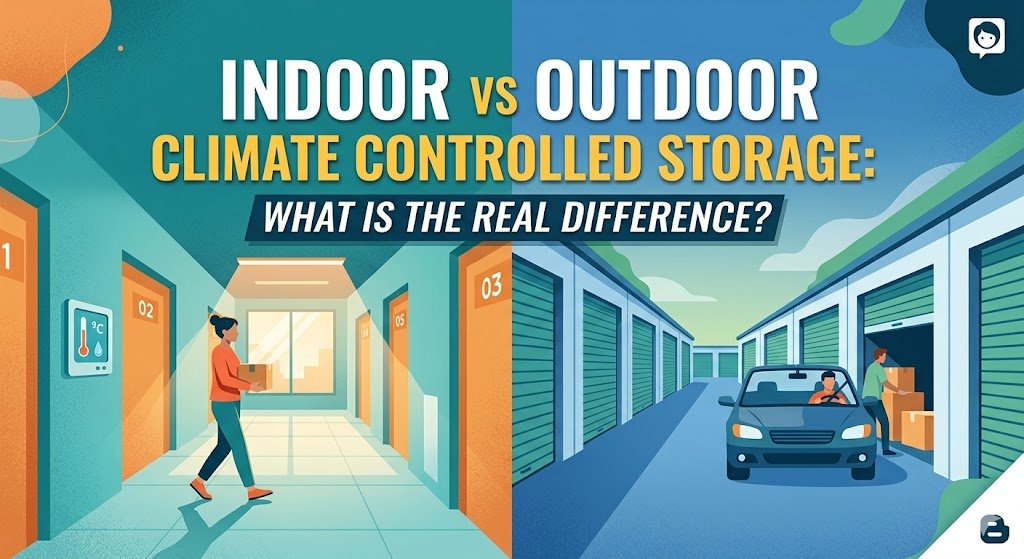
When searching for climate controlled storage or temperature controlled storage units, one of the first decisions you will face is whether to opt for an indoor or outdoor facility. At first glance, both options may appear similar – after all, they both offer some degree of protection for your goods. However, the differences between them are significant, and choosing the wrong option can leave your belongings, stock or equipment exposed to damage that could have been entirely avoided.
In this guide, we explain exactly what sets indoor and outdoor climate controlled storage apart, what level of protection each genuinely provides, and how to determine which solution is right for your specific needs.
What Is Climate Controlled Storage?
Before comparing indoor and outdoor options, it is worth clarifying what climate controlled storage actually means. A true climate controlled storage unit is one that actively regulates both temperature and humidity levels throughout the year, regardless of external weather conditions.
This is distinct from simple temperature controlled storage, which manages heat and cold but may not address humidity. True climate controlled storage units typically maintain temperatures between 10°C and 27°C and keep relative humidity below 55%, creating a stable environment that actively prevents moisture damage, mould, corrosion and the warping of sensitive materials.
In the UK, where the climate brings damp winters, warm and humid summers, and significant seasonal temperature swings, this level of control is particularly important for any goods that are sensitive to environmental conditions.
Indoor Climate Controlled Storage: What It Offers
Indoor climate controlled storage units are housed within a purpose-built or converted building. The entire structure – walls, ceilings, floors and corridors – contributes to the environmental stability of the units contained within it. Here is what indoor facilities typically provide:
Consistent temperature and humidity regulation
Because indoor units are enclosed within a building, they benefit from a second layer of thermal insulation beyond their own unit walls. The building itself acts as a buffer against external temperature extremes, making it far easier for the climate control system to maintain stable conditions. This is especially relevant in the UK, where outdoor temperatures can range from well below freezing in winter to over 30°C during summer heatwaves.
Superior protection from damp and mould
Humidity is the primary cause of damage to stored goods in the UK. Indoor climate controlled storage units are tightly sealed and use HVAC systems to maintain humidity at consistent, low levels. This prevents the condensation, damp ingress and mould growth that commonly affect outdoor storage in the British climate.
Cleaner storage environment
Indoor facilities benefit from significantly lower levels of dust, debris and airborne particles. Because units are accessed via internal corridors rather than direct outdoor exposure, there is much less opportunity for dirt and contamination to enter. This is particularly important for businesses storing food ingredients, pharmaceutical products, electronics or sensitive archival materials.
Pest prevention
Sealed, insulated buildings with regulated internal conditions are far less hospitable to rodents, insects and other pests. The combination of tight sealing, low humidity and consistent temperatures removes the conditions that attract and sustain pest activity – a serious concern in outdoor storage environments, particularly in rural or semi-rural locations.
Outdoor Climate Controlled Storage: What It Actually Means
The term “outdoor climate controlled storage” can be misleading, and it is important to understand what it does and does not mean in practice. Most outdoor storage facilities consist of shipping containers or steel units positioned in open storage yards. While some outdoor units may incorporate basic insulation or ventilation, they very rarely offer the active temperature and humidity management that constitutes genuine climate control.
The limitations of outdoor storage in the UK
Steel containers, even insulated ones, are highly susceptible to heat transfer. In summer, an outdoor steel unit can reach extreme internal temperatures when exposed to direct sunlight. In winter, the same unit can drop to temperatures that damage electronics, crack wooden furniture, freeze liquids and degrade sensitive materials. Without active heating and cooling, there is no meaningful climate control – only a degree of weatherproofing.
Humidity management is also extremely difficult to achieve in an outdoor setting. Condensation forms when warm, moist air comes into contact with cool steel surfaces – a process that happens repeatedly throughout the year in outdoor UK storage units and is one of the leading causes of mould, rust and material degradation.
When outdoor storage is appropriate
Outdoor storage units are well suited to robust, non-sensitive items that do not require environmental protection. Common appropriate uses include:
- Garden equipment, tools and machinery
- Vehicles, boats and caravans
- Building materials and construction equipment
- Large, durable items where appearance is not a priority
For any goods that are sensitive to temperature, humidity or environmental conditions, outdoor storage – even when described as climate controlled – is unlikely to provide adequate protection.
Indoor vs Outdoor: A Direct Comparison
The table below summarises the key differences between indoor climate controlled storage and outdoor storage options:
| Feature | Indoor Climate Controlled | Outdoor Storage |
| Temperature regulation | Active – year-round control | Passive – varies with weather |
| Humidity control | Active – maintained below 55% | None or minimal |
| Mould & damp risk | Very low | High in UK conditions |
| Dust & contamination | Very low | Moderate to high |
| Security | Multi-layer – building + unit | Unit-level only |
| Pest risk | Very low | Moderate to high |
| Suitable for sensitive goods | Yes | No |
| Cost | Higher – reflects protection level | Lower |
| 24/7 access | Available at many facilities | Often available |
What Should Be Stored in Indoor Climate Controlled Storage?
A wide range of goods and materials require the stable, regulated environment that only a genuine indoor climate controlled storage unit can provide. These include:
Business and commercial goods
- Food ingredients, finished food products and perishables
- Pharmaceutical products, medicines and medical supplies
- Electronic equipment, computers and sensitive technology
- Business archives, documents and records
- Retail stock sensitive to temperature or humidity
- Fine wines, spirits and specialist beverages
Personal and household items
- Wooden and upholstered furniture
- Antiques, artwork and collectibles
- Musical instruments
- Clothing, leather goods and fabrics
- Family photographs, documents and irreplaceable items
- Vinyl records, books and media collections
Industrial and specialist applications
- Seed storage at controlled temperature and humidity
- Pharmaceutical curing and stability testing
- Biological samples and research materials
- Chemicals requiring precise temperature management
- Specialist manufacturing components
The UK Climate: Why Indoor Storage Matters More Than You Might Expect
The UK’s temperate but highly variable climate makes climate controlled storage more relevant here than in many other countries. British winters bring sustained cold, damp and frost. British summers, increasingly, bring heatwaves that push temperatures well above what many materials can safely withstand. And throughout the year, the UK experiences significant humidity – particularly in coastal and western regions.
Standard storage units, whether indoor or outdoor without active climate control, fluctuate with outdoor conditions. Over weeks and months, repeated cycles of warming and cooling, dampening and drying, cause cumulative damage to stored goods that is often irreversible. Furniture warps, electronics corrode, paper yellows, leather cracks and fabrics develop mould.
A genuine indoor temperature controlled storage unit eliminates these cycles entirely, maintaining consistent conditions regardless of what the weather outside is doing.
How to Identify Genuine Indoor Climate Controlled Storage
Not all storage facilities that use the terms “climate controlled” or “temperature controlled” provide the same level of environmental management. When evaluating a provider, the following questions will help you establish whether their offering is genuine:
- Is the unit located within an enclosed, insulated building?
- Does the facility use active HVAC systems to regulate both temperature and humidity?
- What temperature range does the facility maintain, and is this monitored continuously?
- Are humidity levels actively managed and monitored?
- Does the facility have documented temperature and humidity records available?
- What is the facility’s response procedure if climate control systems fail?
Any reputable provider of indoor climate controlled storage units will be able to answer these questions clearly and confidently.
Choosing the Right Temperature Controlled Storage for Your Needs
The decision between indoor and outdoor storage ultimately comes down to what you are storing and what level of protection it requires. If your goods are robust, non-sensitive and simply need protection from rain and theft, an outdoor unit may be a cost-effective choice. However, if you are storing anything that could be damaged by temperature extremes, humidity, damp, pests or dust – whether as a business or an individual – indoor climate controlled storage is not a luxury, it is a necessity.
For businesses in food production, pharmaceuticals, logistics, retail, manufacturing and many other sectors, the cost of a climate controlled storage unit is negligible compared to the cost of damaged stock, compliance failures or loss of irreplaceable materials.
Find Out More About Conrail’s Climate Controlled Storage Solutions
At Conrail, we specialise in the supply of high-quality climate controlled containers and temperature controlled storage units for businesses across the UK. Whether you need a standard refrigerated container, a deep freeze unit, a humidity-controlled solution or a bespoke modular system, our team can recommend the right configuration for your specific requirements.
All of our units are manufactured to the highest standards at our facility in Germany and meet full UK industry compliance requirements. We offer both hire and purchase options with flexible terms and 24/7 engineer support.
Frequently Asked Questions
What is climate controlled storage?
Climate controlled storage is a storage solution where both temperature and humidity are actively regulated. A climate controlled storage unit helps protect sensitive items from heat, cold, moisture and mould.
What is the difference between climate controlled storage and temperature controlled storage?
Temperature controlled storage regulates heat and cold, while climate controlled storage manages both temperature and humidity. This makes climate controlled storage units better for items that can be damaged by damp conditions.
What items require climate controlled storage units?
Items such as furniture, electronics, documents, artwork, musical instruments and clothing are best stored in climate controlled storage units because they are sensitive to humidity and temperature changes.
Are temperature controlled storage units suitable for businesses?
Yes. Many businesses use temperature controlled storage units to store stock, equipment and materials that must remain within stable temperature conditions.
Is indoor climate controlled storage better than outdoor storage?
Indoor climate controlled storage units usually provide better protection because they maintain consistent temperature and humidity levels throughout the year.
To discuss your requirements and receive a free quote, contact the Conrail team today:
info@conrail.co.uk
01252 715406
Conrail
Wey Court West, Union Road, Farnham, GU9 7PT