
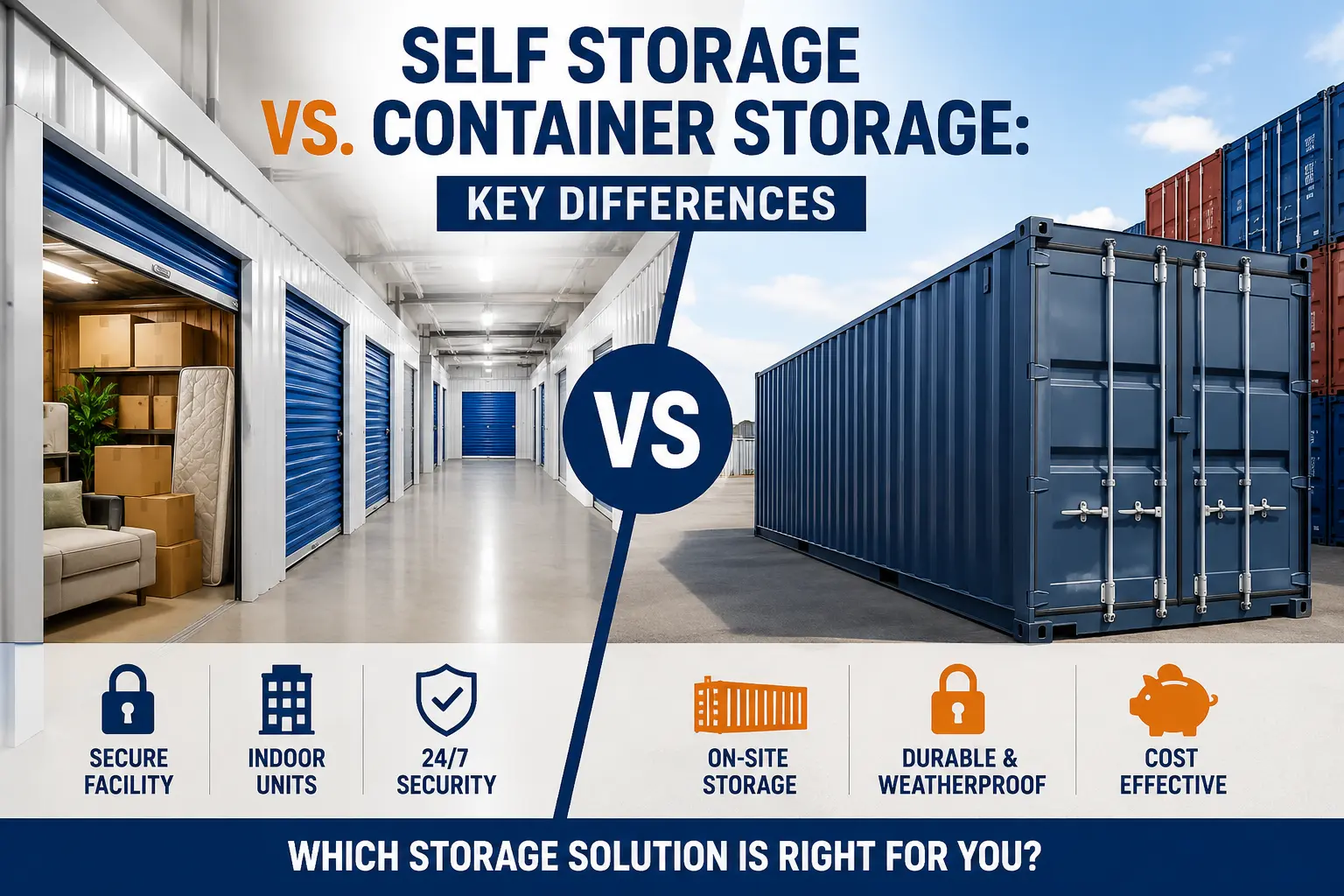
Finding the perfect storage solution can really help you save time, money, and a whole lot of stress. But let’s be honest, many businesses and homeowners find themselves stuck when it comes to choosing between self-storage and container storage. Both options have their perks, but they cater to different needs.
That’s why it’s so important to grasp the key differences to make the best choice for your situation. Whether you’re looking for extra space for your business or need a temporary spot while moving, picking the right option is crucial. Plus, the demand for storage containers, whether for hire or for sale, is on the rise all across the UK.
What Is Self Storage?
Self-storage facilities offer safe indoor units that cater to both personal and business needs. Customers can choose from a variety of sizes to find the perfect fit for their belongings. Plus, they have the convenience of accessing their items during regular hours or even around the clock with 24/7 access options.
These facilities typically come equipped with top-notch security features, like CCTV cameras, gated entry, and alarm systems, all designed to keep your possessions safe. Additionally, many places offer climate-controlled units, which are ideal for storing sensitive items that need a little extra care.
Self-storage works well for:
- Household furniture
- Office files
- Seasonal inventory
- Student belongings
- Personal valuables
However, self-storage may involve higher monthly costs over time.
What Is Container Storage?
Container storage uses durable steel shipping containers for secure storage. These units are weatherproof, portable, and highly versatile. Consequently, many businesses prefer them for industrial or commercial storage.
Many companies, like Conrail, offer Storage Container hire for short-term and long-term needs. In addition, businesses often choose a Storage Container for sale for permanent storage solutions.
Container storage is ideal for:
- Construction equipment
- Retail stock
- Industrial tools
- Machinery
- Bulk inventory
Unlike self-storage, containers can often remain on-site. Therefore, access becomes more convenient for operational businesses.
Key Difference: Accessibility
Accessibility is a key factor that sets these two options apart. With self-storage facilities, you typically have to travel to a specific site. While many of these places do offer flexible access hours, you’re still bound by their rules.
On the other hand, Storage Containers can often stay at your property or worksite. As a result, you gain immediate access whenever needed. Businesses with daily operational needs benefit greatly from container storage. Moreover, construction companies often rely on on-site containers for faster workflow.
Security Comparison
Both storage options provide solid security, but they go about it in different ways. Self-storage facilities rely on monitored systems and controlled access points, which give customers peace of mind when storing their valuable items.
On the other hand, modern storage containers are built from heavy-duty steel and come with secure locking mechanisms. Many of these containers even have lock boxes for that extra layer of protection. Container storage is particularly tough against theft and harsh weather conditions, making it a popular choice in various industries for safeguarding expensive equipment.
Cost Differences
Cost plays a major role when selecting storage. Self-storage prices often increase based on location and facility features. For instance, climate-controlled units usually cost more.
In contrast, Storage Container hire often delivers better value for larger storage needs. Businesses storing bulk inventory can reduce expenses significantly.
Furthermore, purchasing a Storage Container for sale may save money long-term. Instead of paying monthly rental fees, companies own a permanent storage asset. Therefore, container storage often becomes the more economical option for commercial users.
Space and Capacity
When it comes to storage, container storage often offers a lot more space than your typical self-storage units. You can find standard shipping containers in a range of sizes, like 10ft, 20ft, and 40ft, making it super easy for businesses to stash away heavy equipment and oversized materials.
On the flip side, self-storage units also come in different sizes, but they might struggle to handle larger industrial items effectively. That’s why businesses looking for ample storage space usually lean towards storage containers.
Durability and Weather Protection
When it comes to container storage, durability is a standout benefit. These shipping containers are built to handle the rigours of international transport, even in the most extreme weather. They can easily endure heavy rain, fierce winds, and fluctuating temperatures without breaking a sweat.
That’s why many businesses opt for container hire for their outdoor projects; these containers are dependable all year round. While self-storage facilities do offer indoor protection, container storage truly shines when it comes to standing up to tough conditions.
Mobility and Flexibility
Container storage provides exceptional mobility. A hired container can often be delivered directly to your location. Therefore, loading and unloading become easier and faster.
These benefits of flexibility:
- Construction sites
- Event companies
- Retail businesses
- Agricultural operations
Additionally, businesses can relocate containers when operational needs change. Self storage lacks this portability. Since items stay inside fixed facilities, transportation becomes an extra step.
Best Option for Businesses
When it comes to businesses, having practical and scalable storage solutions is a must. That’s why container storage often stands out as the go-to option. Companies looking for secure outdoor storage really hit the jackpot with Storage Containers.
Plus, these container units boost operational efficiency since workers can grab equipment right when they need it. Many businesses also see the value in purchasing a Storage Container to save on long-term costs. Owning one means you have complete control and can ditch those pesky rental fees. On the flip side, self-storage still plays a vital role for businesses that need smaller indoor units or climate-controlled spaces.
Which Storage Solution Should You Choose?
Choosing between self-storage and container storage depends on your specific needs.
Self-storage works best for:
- Personal belongings
- Indoor protection
- Climate-sensitive items
- Short-term household storage
Container storage works best for:
- Commercial equipment
- Construction materials
- Bulk inventory
- On-site storage needs
Additionally, Storage Container hire offers flexibility without high upfront costs. Meanwhile, buying a Storage Container for sale delivers long-term value for growing businesses.
Conclusion
When it comes to businesses, having practical and scalable storage solutions is a must. That’s why container storage often stands out as the go-to option. Companies looking for secure outdoor storage really hit the jackpot with Storage Containers.
Plus, these container units boost operational efficiency since workers can grab equipment right when they need it. Many businesses also see the value in purchasing a Storage Container to save on long-term costs.
Owning one means you have complete control and can ditch those pesky rental fees. On the flip side, self-storage still plays a vital role for businesses that need smaller indoor units or climate-controlled spaces.