
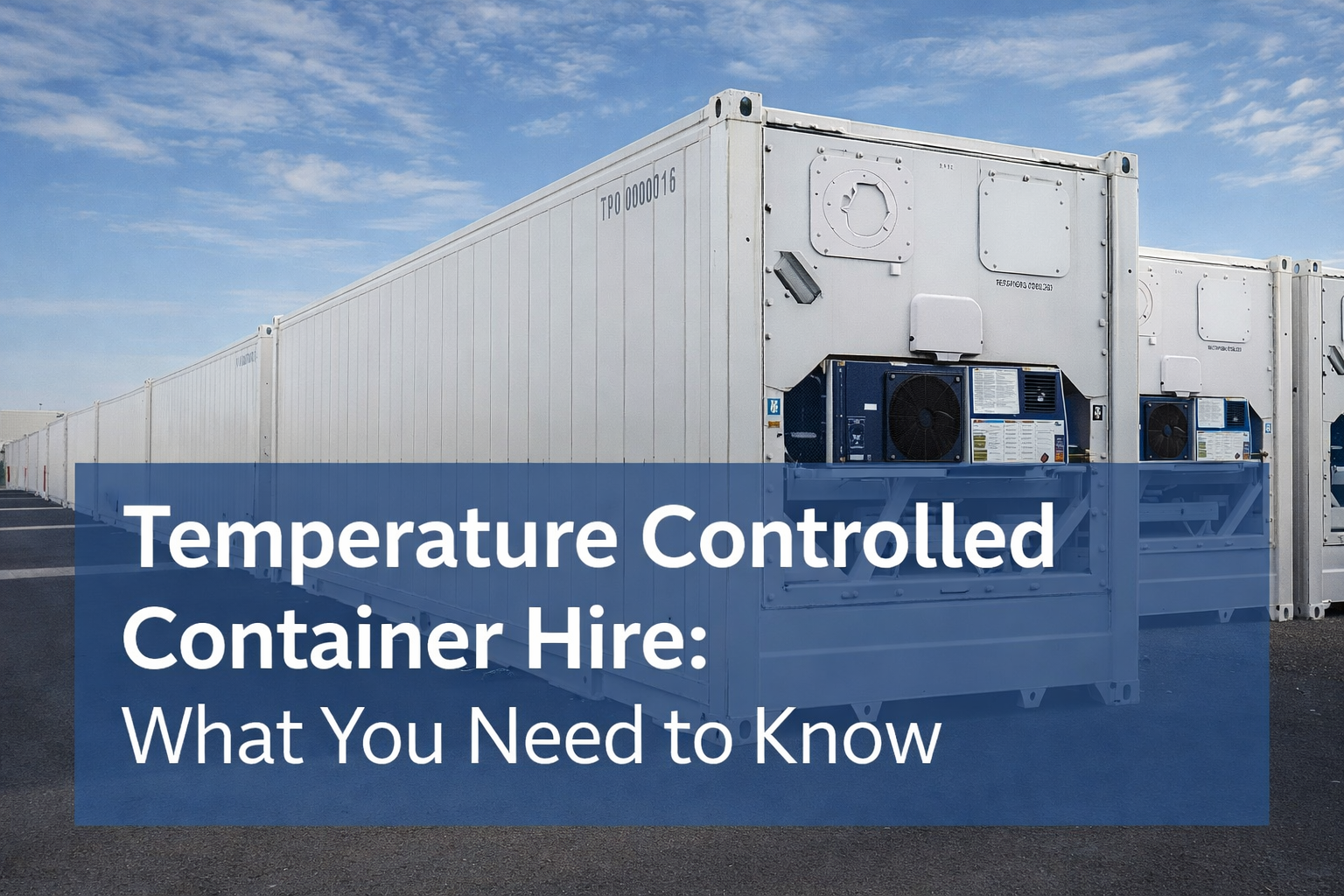
Whether you are a food manufacturer, pharmaceutical company, freight forwarder or logistics provider, maintaining precise temperature conditions for your products is non-negotiable. Temperature controlled container hire has become one of the most practical, cost-effective, and flexible solutions available to UK businesses that need reliable cold or heated storage, without the expense or commitment of a permanent facility.
This blog covers everything you need to know: what these containers are, who uses them, what to look for, and how hiring compares to buying. We will also answer the most frequently asked questions so you can make a confident, informed decision.
What Is Temperature Controlled Storage?
Temperature controlled storage refers to any storage environment where the internal climate is actively maintained within a set range – whether that is chilled, frozen, ambient, or heated. Unlike standard containers or warehouse space, a temperature controlled storage unit uses integrated refrigeration or heating systems to hold conditions steady, regardless of what is happening outside.
Temperature controlled containers come in a range of types designed for different operational needs. Refrigerated containers (reefers) are the most common, typically holding between +2°C and +8°C, making them ideal for perishable food and chilled pharmaceuticals. Deep freeze containers operate at much lower temperatures – in some cases as low as -40°C – and are used for frozen goods, DNA storage, and specialist research applications. Heated containers, by contrast, maintain temperatures up to +80°C or +90°C, suited to industrial processes or chemical storage in cold climates. Humidity-controlled containers add a further layer of precision, managing both temperature and moisture simultaneously.
Who Needs Temperature Controlled Container Hire?
The demand for temperature controlled container hire spans a wide range of sectors. Common use cases include:
- Food and beverage manufacturers and distributors managing seasonal demand spikes or supply chain disruptions
- Pharmaceutical companies requiring GDP-compliant storage for medicines, vaccines, or clinical trial materials
- Retail businesses needing overflow chilled or frozen capacity during peak trading periods
- Oil, gas, and chemical companies storing temperature-sensitive substances or hazardous materials
- Research and development teams running accelerated testing or storing biological samples
- Agricultural businesses maintaining seed viability at controlled humidity and temperature
- Event operators requiring on-site refrigeration for catering or medical supplies
- Construction and manufacturing sites needing heated storage in cold-weather conditions
In short, if your business handles anything that degrades, spoils, reacts, or loses efficacy outside a specified temperature band, temperature controlled containers are a practical solution.
Key Features to Look For in a Temperature Controlled Storage Unit
Not all temperature controlled containers are built to the same standard. When evaluating options, here are the features that matter most:
Temperature Range and Accuracy
The container must be capable of reaching and maintaining your required temperature band consistently. Look for units with high accuracy tolerances – for example, ±0.5°C – particularly if you are storing pharmaceuticals or conducting scientific work where drift can compromise results.
Insulation Quality
High insulation value and low air leakage reduce energy consumption and maintain stability. A poorly insulated container will struggle to hold temperature in extreme ambient conditions and will cost significantly more to run.
Safety and Compliance Features
For occupied or high-risk environments, look for escape hatches, internal alarms, and strip curtains. For hazardous goods storage, ATEX-rated explosion-proof containers may be a regulatory requirement. Always confirm that the unit meets applicable UK industry standards for your sector.
Monitoring and Data Logging
Remote monitoring and data logging are increasingly standard – and in regulated industries, often mandatory. Real-time alerts, automated reporting, and audit trails provide peace of mind and support compliance documentation.
Power and Energy Efficiency
Energy-saving LED lighting, efficient compressor units, and low-leakage design all contribute to lower running costs. Confirm what power supply the container requires and whether your site can accommodate it before committing.
Hire vs. Buy: Is a Temperature Controlled Container for Sale a Better Option?
One of the most common questions businesses face is whether to hire or purchase outright. The right answer depends on your situation, but here is a straightforward comparison:
Reasons to Hire
- Lower upfront cost – no large capital outlay required
- Flexibility to scale up or down as your needs change
- Ideal for seasonal demand, project-based needs, or disaster recovery
- Maintenance and servicing responsibility typically sits with the supplier
- Faster deployment with no long-term commitment
Reasons to Buy
- Lower total cost of ownership over a long time horizon
- Full control over the asset and its configuration
- Suitable for permanent, consistent operational requirements
- Asset sits on your balance sheet
For many businesses, the hybrid approach works best: hire during peak periods or for temporary requirements, and consider a temperature controlled container for sale once long-term demand is established. Reputable suppliers such as Conrail offer both options, allowing you to transition from hire to purchase as your business needs evolve.
How to Choose the Right Temperature Controlled Container Hire Company
With a number of suppliers in the UK market, it is worth knowing what to look for. The right provider should offer:
- A proven track record across multiple sectors – not just one industry
- A range of container types, including refrigerated, heated, deep freeze, and humidity-controlled units
- Bespoke or modular configurations for non-standard requirements
- Clear compliance credentials – containers manufactured to UK and European regulatory standards
- Responsive customer support, ideally with 24/7 engineer availability to minimise downtime
- Transparent pricing with no hidden costs
Conrail has been supporting UK businesses with specialist temperature controlled containers since 2009. With a manufacturing plant in Germany and a full range of standard and bespoke climate-controlled solutions, Conrail works across sectors including pharmaceuticals, food and ingredients, chemicals, 3PL, events & ecommerce, Multi-Tier Farming and Agricultural Research, Storing High-Value Artwork and Antique Furniture, retail, and research and development. The team provides 24/7 engineer support – remote and on-site – to protect your operation from costly downtime.
Frequently Asked Questions About Temperature Controlled Container Hire
How long can I hire a temperature controlled container for?
Hire periods are flexible and can range from a few days to several years. Short-term hire is ideal for events, seasonal peaks, or emergency situations. Longer-term agreements are available for businesses with ongoing requirements. Most providers, including Conrail, will tailor the agreement to suit your operational timeline.
What temperature range can these containers achieve?
Depending on the container type, the temperature range can span from -40°C for deep freeze applications up to +90°C for heated storage. Humidity-controlled units can manage both temperature and moisture simultaneously, with accuracy tolerances as tight as ±0.5°C.
Are temperature controlled containers compliant with UK regulations?
Quality suppliers manufacture and supply containers in line with UK and European industry standards. This includes compliance requirements for pharmaceutical storage (GDP), food safety, and hazardous goods. Always confirm compliance credentials before hiring, and ask for documentation where regulatory audits may apply.
What power supply do temperature controlled containers need?
Most units operate on a standard 240V or three-phase power supply. The specific requirement will depend on the container type and size. Your supplier should confirm power requirements at the quotation stage so you can prepare your site accordingly.
Can temperature controlled containers be used outdoors?
Yes. Temperature controlled containers are specifically designed for outdoor deployment. They are built to withstand UK weather conditions while maintaining internal climate stability. They can be sited in yards, car parks, loading areas, or any hardstanding surface with appropriate power access.
What is the difference between temperature controlled and climate controlled storage?
Temperature controlled storage regulates temperature only. Climate controlled storage manages both temperature and humidity. For most food and pharmaceutical applications, temperature control alone is sufficient. However, for items sensitive to moisture – such as seeds, electronics, or certain chemicals – humidity control adds an important layer of protection.
Final Words
Temperature controlled container hire offers UK businesses a flexible, scalable, and cost-effective alternative to permanent cold storage infrastructure. Whether you need chilled space for a seasonal campaign, deep freeze storage for a specialist application, or a fully bespoke modular system, the right container solution is available to hire – or purchase – on terms that suit your operation.
The key is working with a supplier like Conrail that understands your sector, has the engineering capability to support you, and can deliver a compliant, reliable solution without disruption to your business.