
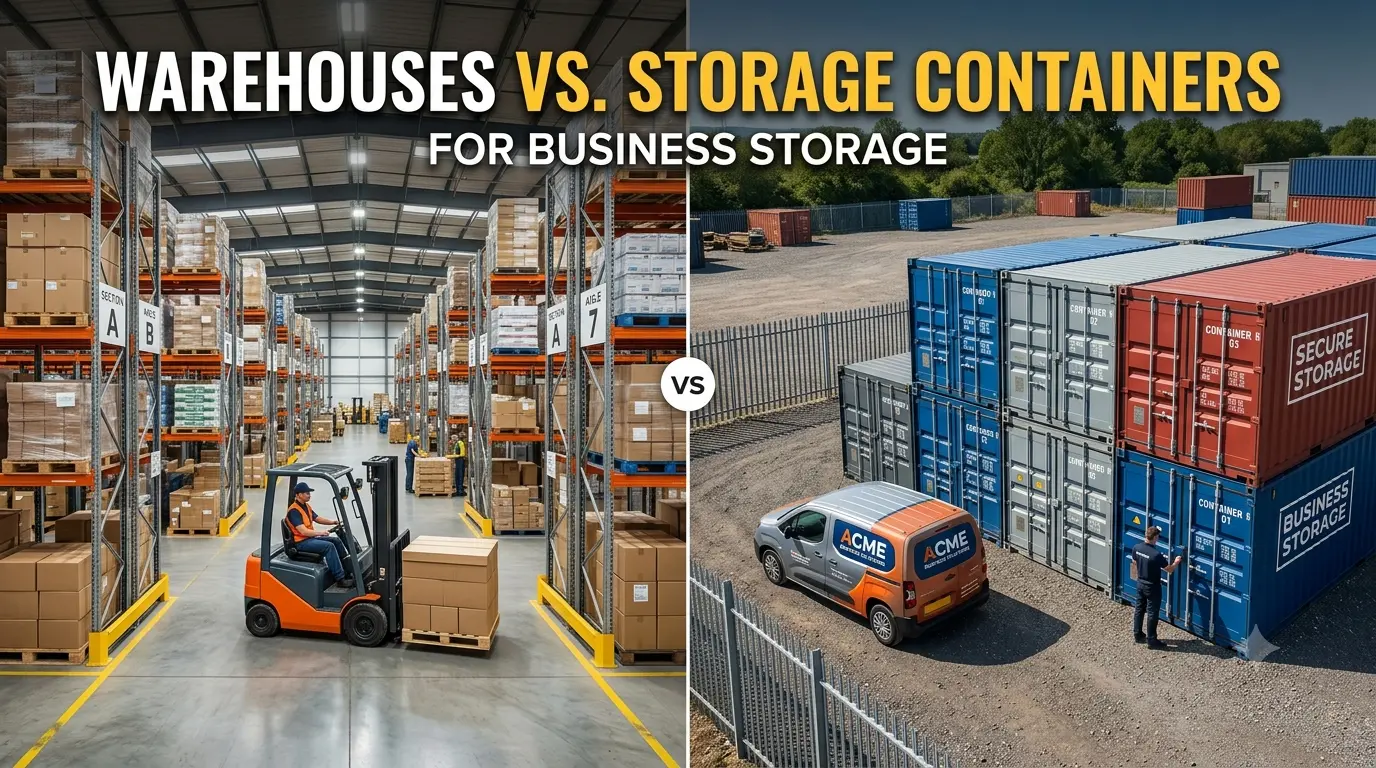
As businesses grow, they often find that their current space just can’t keep up with their needs. Inventory piles up, equipment starts to take over, and seasonal demands shift, leaving no room to breathe. When this happens, companies typically face a choice between warehouse storage and storage containers. Both options can offer much-needed extra space, but they serve different purposes.
A warehouse provides a classic, enclosed storage setup with ample floor space and facilities tailored for commercial use. In contrast, storage containers offer a secure and flexible solution that can be placed right on your business site or at another convenient location. For those companies looking to expand their capacity without the hassle of moving into a bigger building, containers can be a smart choice. Conrail is here to provide both standard and specialized container solutions for businesses throughout the UK.
Understanding Business Storage Options
When we think of warehouse storage, it often brings to mind businesses that require a lot of floor space, efficient stock management, loading docks, employee facilities, and a steady flow of goods. This setup is especially beneficial for distributors, manufacturers, and well-established e-commerce companies that handle large volumes of inventory on a daily basis.
However, it’s important to keep in mind that renting extra warehouse space can come with hefty fixed costs. Companies need to factor in expenses like rent, business rates, utilities, insurance, staffing, handling equipment, and transportation. If the need for space is only temporary or seasonal, committing to a large warehouse could mean paying for space that isn’t always in use.
What Does Warehouse Storage Offer?
A warehouse provides a dedicated environment where businesses can organise inventory, equipment and materials systematically. Larger facilities may include loading bays, racking, forklifts, office areas and specialist infrastructure.
That makes warehouse storage particularly valuable when storage is closely connected to daily fulfilment operations. An e-commerce company processing hundreds of orders, for example, may benefit from having aisles, shelving and dedicated picking areas rather than simply having a secure container.
What Are Storage Containers?
A storage container is a secure steel unit designed to provide additional storage capacity without requiring a permanent building extension. According to Conrail, their storage containers come in various sizes and styles, including options with side openings and steel floors.
For many businesses, the real game-changer is the flexibility these containers provide. They can create a dedicated area for stock, tools, machinery, equipment, or materials, all while keeping those items separate from the main workspace. Plus, businesses have the option to either rent a storage container or buy one outright, depending on how long they anticipate needing the extra space.
Benefits of Storage Containers for Businesses
Storage containers are a fantastic solution for businesses that need secure space in a hurry. With their sturdy steel construction, they offer a strong defense against unauthorized access, and their weather-resistant designs keep your stored items safe from the unpredictable UK climate.
These containers are also incredibly adaptable to shifting business needs. For instance, a construction company might find itself in need of extra space during a big project, while a retailer could require additional storage during peak sales seasons. Rather than going through the hassle of expanding a building, businesses can simply add containerized storage to meet rising demand.
Warehouses vs. Storage Containers: Key Differences
| Factor | Warehouse | Storage Container |
| Space | Large, scalable floor area | Fixed unit sizes |
| Cost structure | Usually higher ongoing overheads | Flexible hire or purchase |
| Location | Usually fixed | Can be delivered to a suitable site |
| Security | Depends on facility | Robust steel construction and locking |
| Best for | High-volume operations | Stock, equipment and overflow storage |
| Flexibility | Lower for short-term needs | High |
| Expansion | Requires additional premises | Additional containers can be added |
Cost and Financial Flexibility
When it comes to costs, it’s often a major factor to consider. While a warehouse offers a lot more usable floor space, businesses might end up paying for facilities and capacity that they don’t always need. Renting a storage container can help ease the financial burden upfront since the business is leasing the unit instead of buying it outright.
In the UK, various providers offer container hire at different rates based on size, location, duration, and features. This is why it’s smart for businesses to ask for a quote tailored to their specific site rather than just going with a one-size-fits-all national price. For those with long-term needs, purchasing a storage container can be a more sensible option, as it allows the business to own the asset instead of continually shelling out rental fees.
Accessibility and Convenience
A warehouse can be ideal when employees need to pick, pack and move stock throughout the working day. However, a container placed directly at a business site can eliminate unnecessary journeys to an external storage facility.
Imagine a landscaping company storing machinery at a remote warehouse. Every time the team needs a tool, someone has to travel there, retrieve it and return. A container located beside the company’s operating area can turn that process into a much simpler task.
Security and Weather Protection
Businesses cannot afford to treat security as an afterthought. Tools, equipment and inventory can represent a substantial investment, and exposure to rain, moisture and changing weather conditions can cause additional problems.
Quality storage containers are designed to provide secure, weather-resistant storage. Conrail also offers specialist solutions where ordinary ambient storage is not sufficient, including refrigerated, heated and humidity-controlled containers.
When Should a Business Choose a Warehouse?
A warehouse is generally the stronger choice when storage is a central part of business operations. If a company needs extensive floor space, multiple loading areas, dedicated picking zones, racking systems and employees working inside the facility every day, a warehouse provides capabilities that a standard container cannot realistically replace.
Businesses That Need Warehouse Space
Large retailers, wholesalers, distributors and e-commerce businesses often need warehouses because their operations depend on continuous inventory movement. A warehouse can also accommodate office areas, staff facilities and specialised material-handling equipment.
The important question is not simply “Which option is cheaper?” Instead, businesses should ask whether the storage space supports their entire operation. If storage is an operational hub, a warehouse may justify its additional cost.
When Are Storage Containers the Better Choice?
Storage containers become particularly attractive when the business needs additional storage rather than a completely new operating facility. They are useful for stock overflow, tools, construction materials, machinery, seasonal goods and equipment.
Storage Container Hire
Storage container hire is well suited to temporary projects, seasonal demand and businesses that are uncertain about their future space requirements. Hiring avoids the upfront purchase cost and allows a company to match its storage commitment to the duration of its project.
For example, a construction company completing a 12-month project could hire containers for equipment and materials rather than renting a warehouse for several years. Once the project finishes, the container can be collected, reducing unnecessary ongoing storage commitments.
Storage Container for Sale
A storage container for sale can be a sensible choice when storage demand is long term. Instead of paying rental charges indefinitely, a business purchases the unit and gains an asset that can continue serving its operation.
Buying can also provide greater control over modifications and configuration. Depending on the application, containers can be adapted with features such as shelving, lighting or different door arrangements.
How to Choose the Right Business Storage Solution
Start by figuring out how much space you really need right now and what you might require in the coming years. Think about how often your employees will need to access the stored items, where the storage should be situated, and whether your products need standard or specialized environmental conditions.
If your needs are short-term or tend to fluctuate, renting a storage container can give you the flexibility you need. On the other hand, if you have permanent storage needs, buying a storage container might be a smarter choice for long-term management. If your business demands a lot of operational space with regular picking, packing, and moving of goods, then a warehouse is probably the best fit for you.
Conclusion
When it comes to the debate between warehouses and storage containers, there’s really no one-size-fits-all answer. Warehouses tend to shine for large-scale inventory operations, while storage containers offer a more flexible solution for adding secure space without the need to invest in a whole commercial building.
For businesses looking for a straightforward way to boost their capacity, storage containers can be a smart and scalable choice. Whether you’re considering renting a storage container for a short-term project or investing in one for the long haul, the best option really comes down to your specific space needs, budget, access requirements, and how long you plan to store your items.
Explore Conrail Storage Containers and request a solution suited to your business requirements.
FAQs
1. Are storage containers suitable for business use?
Yes. Businesses commonly use storage containers for stock, tools, equipment, machinery, construction materials and seasonal inventory. They can provide secure additional capacity without requiring a permanent building extension.
2. Is storage container hire better than buying?
It depends on how long you need the space. Storage container hire can be suitable for temporary or uncertain requirements, while buying can make sense when the business expects to use the container for many years.
3. Can storage containers be kept on business premises?
Yes, provided the site is suitable and any relevant planning, access or local requirements have been addressed. Businesses should also ensure there is adequate space for safe delivery and positioning.
4. What size storage container does a business need?
The appropriate size depends on the type and volume of goods being stored. Common options include 10ft, 20ft and 40ft containers, with other configurations available for specific applications.
5. Can storage containers protect sensitive goods?
Standard storage containers are intended for general storage, but specialist businesses may require temperature or humidity control. Conrail provides specialist refrigerated, heated and humidity-controlled solutions for applications requiring controlled conditions