
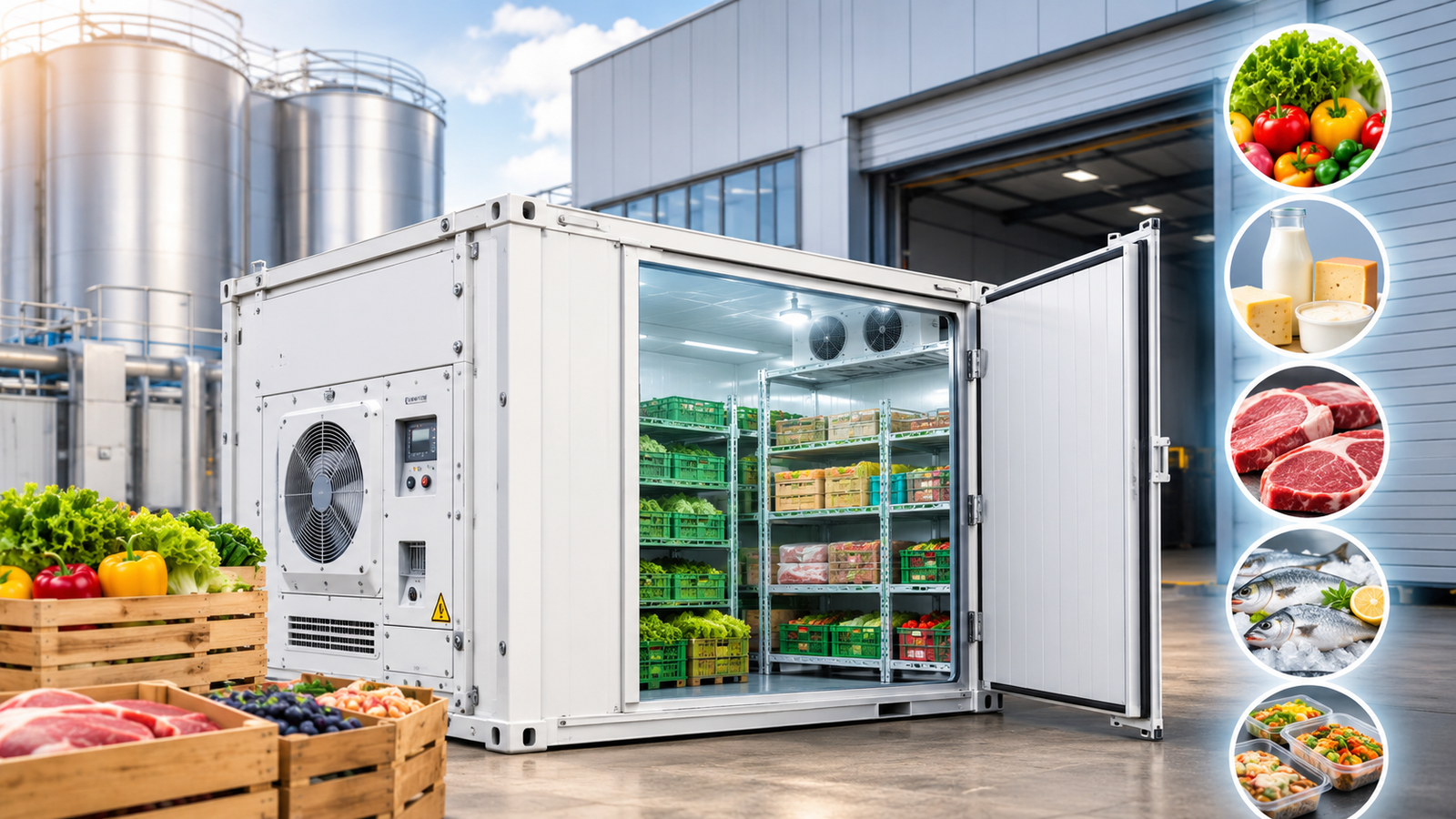
Food manufacturers rarely think about additional cold storage until they need it. A sudden increase in production, planned maintenance, equipment failure, or seasonal demand can quickly leave existing refrigeration capacity stretched. Having access to temporary cold storage allows businesses to protect product quality, maintain food safety standards, and keep production moving without investing in permanent infrastructure.
So, what is the best temporary cold storage solution for a food manufacturer?
For most businesses, a refrigerated shipping container offers the best combination of flexibility, speed, capacity, and cost-effectiveness. It can be delivered quickly, installed with minimal disruption, and provide secure temperature-controlled storage exactly where it’s needed.
In this guide, we’ll explain when temporary cold storage is the right choice, compare the available options, and help you choose the best solution for your operation.
Why Food Manufacturers Need Temporary Cold Storage
Even the most efficient production facilities occasionally need additional cold storage capacity. Common situations include:
- Planned factory maintenance or refurbishment
- Seasonal increases in production
- Equipment upgrades
- Refrigeration breakdowns
- New product launches
- Temporary warehouse expansion
- Delayed product collections
- Unexpected increases in customer demand
- Food safety incidents requiring product segregation
Having additional refrigerated storage available allows production to continue while protecting product quality and maintaining compliance.
What Is Temporary Cold Storage?
Temporary cold storage is exactly what it sounds like – additional refrigerated space that can be hired for days, weeks, or months without investing in a permanent cold room.
Unlike building a new refrigerated warehouse, temporary solutions can often be delivered and operational within a short timeframe, helping businesses respond quickly to changing demands.
Typical applications include storing:
- Fresh produce
- Dairy products
- Meat and poultry
- Seafood
- Ready meals
- Bakery ingredients
- Frozen products
- Beverages
- Chilled ingredients
- Food packaging requiring temperature control
Why Refrigerated Containers Are Often the Best Solution
For many food manufacturers, refrigerated containers provide the ideal balance between practicality and performance.
Fast Deployment
A refrigerated container can often be delivered and positioned quickly, allowing businesses to increase storage capacity without lengthy construction work or operational disruption.
Flexible Rental Periods
Whether you need additional capacity for a weekend, several months, or a longer-term project, hiring allows you to scale storage as required without committing to a permanent installation.
Precise Temperature Control
Modern refrigerated containers can maintain stable temperatures suitable for chilled or frozen products, helping businesses protect product quality throughout storage.
Secure On-Site Storage
Keeping products on-site reduces transport costs and allows production teams to access stock whenever required.
Minimal Business Disruption
Unlike building permanent cold storage, hiring a refrigerated container requires little preparation and avoids lengthy construction projects.
Refrigerated Container vs Cold Room
Choosing the right solution depends on your operational needs.
| Feature | Refrigerated Container | Permanent Cold Room |
|---|---|---|
| Installation time | Fast | Longer installation |
| Upfront investment | Low | High |
| Suitable for temporary demand | Excellent | Less suitable |
| Relocatable | Yes | No |
| Expand capacity quickly | Yes | Limited |
| Long-term permanent storage | Possible | Excellent |
For temporary projects or changing storage requirements, refrigerated containers are often the more practical and cost-effective option.
When Temporary Cold Storage Makes Sense
Seasonal Demand
Many manufacturers experience increased demand during holidays or seasonal promotions. Hiring additional refrigerated storage helps meet production targets without investing in permanent infrastructure that may only be needed for part of the year.
Planned Maintenance
Cold rooms occasionally require servicing or refurbishment. Temporary refrigerated storage allows maintenance work to proceed while keeping products safely stored.
Factory Expansion
During expansion projects, existing storage areas may be unavailable. Temporary refrigerated containers provide additional capacity until construction is complete.
Equipment Failure
Unexpected refrigeration breakdowns can threaten thousands of pounds worth of stock. Having access to temporary refrigerated storage helps minimise disruption and protect valuable products.
New Product Launches
Launching a new product often requires additional storage before production volumes stabilise. Hiring refrigerated storage offers flexibility while demand is assessed.
What Temperature Can Refrigerated Containers Maintain?
Depending on the specification, refrigerated containers can support a wide range of temperature requirements, making them suitable for many food products.
Examples include:
- Chilled food storage
- Frozen food storage
- Fresh produce
- Dairy products
- Meat and poultry
- Seafood
- Ingredients requiring consistent refrigeration
The correct temperature should always be selected based on the product being stored and relevant food safety requirements.
Choosing the Right Size
Selecting the correct container size depends on:
- Volume of stock
- Product dimensions
- Access requirements
- Loading methods
- Site space
- Rental duration
Choosing a container that’s too small can restrict operations, while one that’s unnecessarily large may increase operating costs.
An experienced supplier like conrail can help determine the most appropriate option for your site.
Questions to Ask Before Hiring Temporary Cold Storage
Before selecting a solution, consider:
- How much additional storage capacity do we need?
- How long will the storage be required?
- What temperature range is necessary?
- Is power available on-site?
- Is forklift access required?
- Will staff need frequent access?
- Are there any hygiene or compliance requirements?
- Could demand increase during the hire period?
Planning these factors early helps avoid delays during installation.
Common Mistakes Food Manufacturers Make
Waiting Too Long
Many businesses only start looking for additional storage after capacity has already become a problem.
Planning ahead provides more options and reduces operational pressure.
Choosing the Cheapest Option
Price is important, but reliability, temperature performance, and supplier support are equally critical.
Poor-quality refrigeration can result in product loss that far outweighs any initial savings.
Underestimating Capacity
Businesses often calculate storage based on current demand rather than peak production.
Allowing some additional capacity provides greater operational flexibility.
Ignoring Site Access
Delivery vehicles require sufficient access and space to position refrigerated containers safely.
A site survey or discussion with your supplier can help identify any access considerations in advance.
Food Safety Considerations
Temporary cold storage should support your existing food safety procedures rather than complicate them.
Key considerations include:
- Maintaining consistent storage temperatures
- Preventing cross-contamination
- Monitoring product conditions
- Following HACCP procedures
- Keeping storage areas clean and organised
- Recording temperature data where required
Every food manufacturer has different operational requirements, so temporary storage should integrate seamlessly into existing quality systems.
How Temporary Cold Storage Supports Business Continuity
Unexpected events can happen at any time.
Power failures, refrigeration faults, supply chain delays, and increased customer demand all have the potential to disrupt production.
Having access to temporary refrigerated storage helps businesses:
- Continue production
- Protect valuable stock
- Reduce waste
- Meet customer deadlines
- Avoid costly downtime
- Maintain customer confidence
For many manufacturers, temporary cold storage forms an important part of their wider business continuity planning.
Is Hiring Better Than Buying?
For temporary or seasonal requirements, hiring is often the more economical choice.
Hiring removes the need for significant capital investment while providing flexibility to increase or reduce storage capacity as business needs change.
Buying may be appropriate for businesses with permanent, year-round storage requirements, but many manufacturers benefit from the flexibility that rental provides.
Choosing the Right Supplier
Not all refrigerated container providers offer the same level of service.
When comparing suppliers, consider:
- Experience supplying the food manufacturing sector
- Container quality and maintenance standards
- Temperature performance
- Delivery capability
- Flexible rental options
- Technical support
- Availability during busy periods
Working with an experienced supplier like conrail.co.uk helps ensure the solution is suitable for your products, site, and operational requirements.
Frequently Asked Questions
How quickly can temporary cold storage be installed?
Delivery times vary depending on availability and location, but temporary refrigerated containers can generally be deployed much faster than constructing a permanent cold room.
Can refrigerated containers be used for frozen products?
Yes, provided the container specification and temperature settings are appropriate for the products being stored.
Are refrigerated containers suitable for food manufacturers?
Yes. They are widely used across the food industry for chilled and frozen storage, seasonal overflow, maintenance projects, and emergency situations.
Can I hire a refrigerated container for a short period?
Many suppliers offer flexible rental periods, making temporary storage suitable for both short-term and long-term projects.
Do refrigerated containers require a power supply?
Yes. Refrigerated containers require a suitable electrical connection to operate effectively.
Final Thoughts
Food manufacturing is an industry where consistency matters. When storage capacity becomes limited, the right temporary cold storage solution can help maintain production, protect product quality, and reduce operational risk.
For many businesses, refrigerated container hire offers the fastest, most flexible, and most cost-effective way to increase cold storage capacity without the expense and disruption of building permanent facilities.
Whether you’re preparing for seasonal demand, carrying out planned maintenance, expanding production, or responding to an unexpected refrigeration issue, temporary refrigerated storage gives you the flexibility to keep your operation moving.
If you’re unsure which solution is right for your facility, Conrail’s team can help assess your requirements and recommend a refrigerated or climate-controlled storage solution that fits your products, site, and operational needs.