
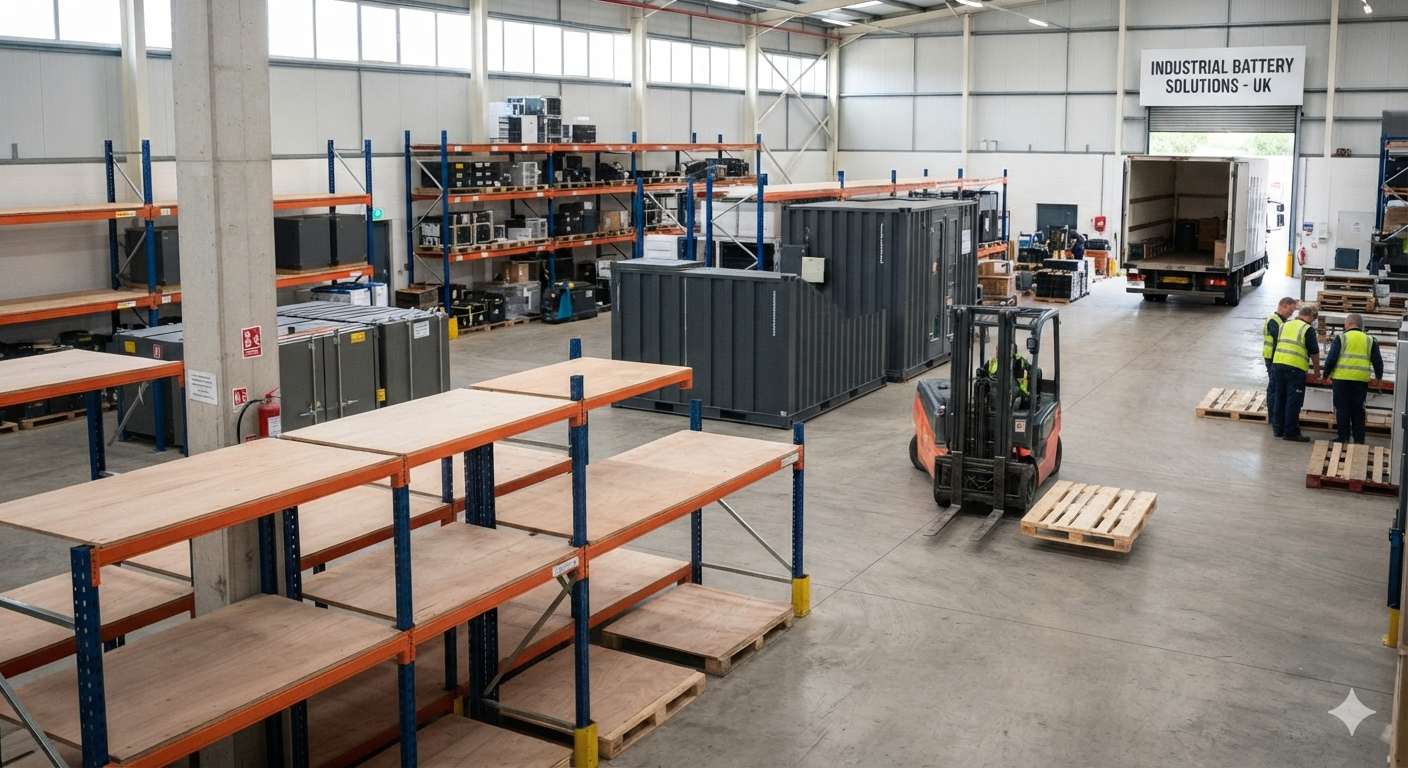
If you’re searching for a lithium battery storage container in the UK, you’re not alone. As battery energy storage systems (ESS), EV charging infrastructure, and industrial battery operations continue to grow across the country, so does demand for storage solutions that are safe, compliant, and fit for purpose. Whether you need a small unit for a handful of battery packs or a large, fire-rated container for a commercial ESS installation, this guide covers everything you need to know before you buy.
Why Lithium Batteries Need Specialist Storage
Lithium-ion and lithium-iron phosphate batteries are efficient, lightweight, and central to modern renewable energy and EV infrastructure – but they come with a specific risk profile. Damaged, faulty, or overheating cells can enter thermal runaway, a chain reaction that produces intense heat, toxic gases, and, in worst-case scenarios, fire or explosion. Standard storage containers, sheds, or warehouse racking simply aren’t designed to contain that kind of event.
A purpose-built lithium battery storage container addresses this by combining:
- Fire-rated internal linings to contain a thermal event and stop it spreading to nearby structures or personnel
- Forced mechanical ventilation to clear off-gassing and reduce the risk of gas build-up
- Blast-relief panels that allow pressure to safely vent in the event of a rapid failure
- Spill containment for damaged or leaking cells
- Optional gas detection and automated fire suppression systems for higher-risk applications
This makes them the go-to solution for energy storage system operators, EV fleet managers, renewable energy projects, and any business handling battery packs at scale.
Where to Buy Lithium Battery Storage Containers in the UK
For businesses looking for a reliable, UK-wide supplier, Conrail specialises in fire-rated, ventilated lithium battery storage containers for both hire and outright purchase. Their containers are manufactured to meet current UK and international safety standards, with fire-rated linings tested to BSEN 1363, and can be specified to suit ESS, EV, or industrial battery storage applications.
Conrail’s lithium battery storage containers are available:
- From 10ft up to 45ft in length, with custom sizing available
- For hire or sale, depending on whether you need a short-term project solution or a permanent installation
- In any RAL colour finish, useful for matching site branding or meeting planning requirements
- With optional gas detection, automated fire suppression, and remote monitoring
- With a choice of flooring, including marine plywood or checker plate, depending on your battery type and site conditions
Containers are delivered directly to site and positioned using a crane-lift or tilt-bed vehicle, with the Conrail team on hand to advise on site preparation and the right specification for your application. You can get in touch via conrail.co.uk or by phone on 01252 715406 to discuss requirements and get a quote.
Small vs Large Lithium Battery Storage Containers in the UK
The right size of container depends entirely on your use case:
Small lithium battery storage containers (UK) are typically suited to:
- Single ESS units or a handful of EV battery packs
- Construction sites needing compact, temporary storage
- Small businesses or workshops storing spare or end-of-life battery stock
Large lithium battery storage containers (UK) are better suited to:
- Utility-scale or commercial energy storage systems
- EV fleet operators with multiple charging or storage requirements
- Industrial sites storing large volumes of battery packs across several units
Because containers can be specified up to 45ft (with bespoke options beyond that), most businesses aren’t limited by a “one size fits all” product – the container is built around the volume and configuration of batteries you need to store.
Fireproof Lithium Battery Containers: What to Look For
Not every container marketed for “battery storage” is genuinely fireproof. When comparing options, look for:
- Fire-rated internal linings with a recognised test standard (e.g. BSEN 1363)
- Forced ventilation, not just passive vents, to actively manage off-gassing
- Blast-relief panels designed to release pressure safely rather than allowing a container to rupture
- Spill containment for leaking or damaged cells
- Optional automated fire suppression and gas detection for higher-risk or larger-scale storage
A genuinely fireproof lithium battery container is engineered around the specific failure mode of lithium chemistry batteries – thermal runaway – rather than being a standard steel box with a fire rating bolted on as an afterthought. If a supplier can’t explain how their container manages ventilation, containment, and pressure release, it’s worth asking more questions before you buy.
Best Lithium Battery Storage Containers UK: What “Best” Actually Means
When people search for the “best lithium battery storage containers UK,” they’re usually comparing suppliers on a mix of:
- Safety specification – fire rating, ventilation, suppression, gas detection
- Flexibility – availability for both hire and purchase, and the ability to switch between the two
- Customisation – RAL colour finishes, flooring type, and internal layout suited to specific battery chemistries
- Delivery and support – UK-wide delivery, site assessment, and ongoing technical advice
- Compliance – meeting current UK and international standards for battery storage
Rather than looking for a single “best” product, it’s more useful to match the specification to your application – a construction site hiring a container for a few months has very different needs to a permanent ESS installation.
Empty Lithium Battery Storage Containers UK: Hire, Buy, or Both?
If you’re specifically looking for an empty lithium battery storage container – i.e. an unfitted unit ready to be configured or filled with your own racking and equipment – most specialist suppliers, including Conrail, offer both:
- Hire, ideal for short-term projects, seasonal demand, or temporary ESS installations, with flexible periods from a few weeks to several months and no long-term commitment
- Purchase, better suited to permanent, long-term storage needs, avoiding ongoing hire costs and allowing full customisation to your specification
Many suppliers like us at conrail will also let you convert a hire agreement into a purchase if your requirements change from temporary to permanent – worth checking before you commit either way.
Lithium Battery Storage Boxes and Bags: Are They Enough?
For very small quantities of batteries – a handful of power tool packs, e-bike batteries, or spare cells – a lithium battery storage box or fire-resistant storage bag can offer a basic level of protection at a much lower cost than a full container. These typically use fire-retardant fabric or coated steel to slow the spread of heat and flame if a single cell fails.
However, boxes and bags are not a substitute for a proper storage container once volumes increase. They generally lack forced ventilation, blast-relief design, and spill containment – meaning they’re better suited to individual consumer use than commercial or industrial battery storage. If you’re managing more than a small number of packs, or operating any kind of ESS or EV infrastructure, a fire-rated container is the appropriate solution.
How to Store Batteries in the UK: General Best Practice
Whatever scale you’re storing at, a few principles apply consistently:
- Keep batteries away from direct sunlight and extreme temperatures. Heat accelerates degradation and increases fire risk.
- Store in a dry, well-ventilated space. Moisture can damage cells and terminals, while ventilation reduces the risk of gas build-up.
- Separate damaged or swollen batteries immediately. Never store a compromised cell alongside healthy ones.
- Avoid stacking loose batteries. Use proper racking or compartmentalised storage to prevent terminals from touching.
- Keep a fire extinguisher rated for lithium battery fires nearby. Standard extinguishers are often ineffective against thermal runaway.
- Follow UK fire safety and environmental regulations relevant to your sector, particularly for commercial or industrial storage volumes.
For anything beyond small-scale personal storage, a purpose-built fire-rated container is the safest and most compliant option.
Does the UK Have Battery Storage?
Yes. The UK has a rapidly growing battery energy storage sector, driven largely by the expansion of renewable energy generation and the need to balance supply and demand on the grid. Battery storage systems – ranging from small commercial installations to large-scale grid projects – are increasingly common across the country, supporting everything from solar and wind farms to EV charging networks. As this sector grows, demand for compliant, fire-safe storage infrastructure – including specialist containers – continues to rise alongside it.
FAQs
What is the 80/20 rule for lithium batteries?
The 80/20 rule refers to a charging practice where lithium-ion batteries are kept between roughly 20% and 80% state of charge, rather than being fully charged to 100% or fully discharged to 0%. Charging and discharging within this middle range is generally believed to reduce stress on the battery’s chemistry, which can help extend its usable lifespan over time. This principle applies to how batteries are used and charged day-to-day – it’s separate from how they should be physically stored, where cool, dry, ventilated conditions matter most.
How to store batteries in the UK?
Batteries should be stored in a cool, dry, well-ventilated environment, away from direct sunlight and sources of heat. Damaged or swollen cells should be isolated immediately, and batteries shouldn’t be stacked loosely where terminals could touch. For small quantities, a fire-resistant storage box or bag may be sufficient. For larger volumes – such as ESS, EV, or industrial battery packs — a purpose-built, fire-rated lithium battery storage container is the recommended and often expected standard, particularly where UK fire safety regulations apply.
Does the UK have battery storage?
Yes, the UK has an established and expanding battery storage sector, supporting renewable energy generation, grid balancing, and EV infrastructure. Battery storage projects range from small commercial systems to large grid-scale installations, and the sector continues to grow as the UK expands its renewable energy capacity.
Are lithium battery storage containers available for hire as well as purchase?
Yes. Most specialist suppliers, including Conrail, offer both hire and outright purchase, so you can choose the option that best suits your project timeline — whether that’s a short-term construction site requirement or a permanent installation.
What sizes do lithium battery storage containers come in?
Containers are typically available from around 10ft up to 45ft in length, with custom and bespoke sizing available for larger or more specific requirements.
Are these containers suitable for outdoor use?
Yes. Purpose-built lithium battery storage containers are weatherproof and designed to withstand outdoor and industrial site conditions, with internal climate control available for temperature-sensitive battery chemistries.
Looking to buy or hire a lithium battery storage container in the UK? Conrail supplies fire-rated, ventilated containers for ESS, EV, and industrial battery storage applications, available in a range of sizes for hire or purchase across the UK.